
Desert Hackberry
Celtis pallida
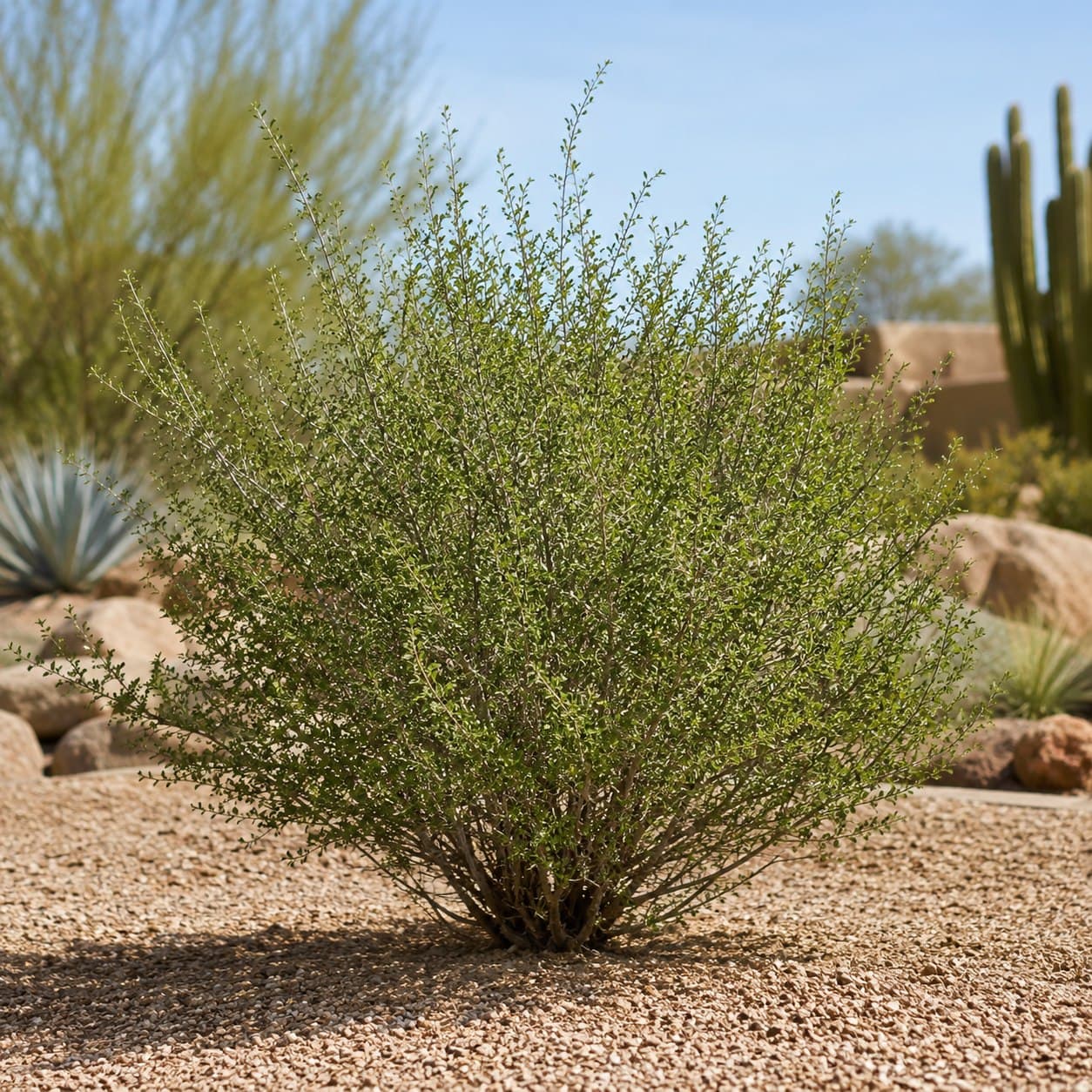
A large Arizona native shrub prized for its excellent wildlife value, providing food and shelter for birds and other wildlife.
Hardy in USDA zones 8-11; an Arizona native tolerant of hard low- and mid-desert frost and full reflected heat, semi-evergreen in mild winters.
AMWUA Notes
A moderate-water native that becomes very drought tolerant when mature; one of the best shrubs for desert bird habitat.
Care Guide
Water deeply every 1-2 weeks in summer to develop a dense screen; established plants are quite drought tolerant and can subsist on little once mature.
Thin and shape in late winter; the zigzag spiny branches make an impenetrable thicket, so wear gloves and prune only to keep it in bounds rather than shearing.
Generally needs no fertilizer in native soil.
Largely pest-free and highly valued instead as bird cover and larval host habitat.
Semi-evergreen in mild winters, it produces small spring flowers and orange berries that draw birds, and it can drop leaves in hard frost or drought.
Soil, Feeding & Propagation
Adaptable to rocky, sandy, or clay desert soils; tolerates caliche and alkaline pH 7.5-8.5.
Needs well-drained soil.
None — thrives in lean desert soil without fertilizer.
From cleaned seed; readily spread by birds.
8 ft
Deep, non-aggressive roots; suckers into thickets but poses no foundation risk.
Placement Tips
- •Plan for a big 10 ft thicket; space 8 ft apart for a wildlife screen or hedgerow.
- •Best at the back of a naturalistic garden or along a property line as living bird habitat.
- •Its moderate litter and spiny interior make it better away from pool decks and manicured patios.
- •Give it full sun and room; it becomes a dense, tangled specimen over time.
Features
Best Uses
Ecological Value
Wildlife Value
Companion Plants



Quick Stats
Design Styles
Include in Your Project
Love Desert Hackberry? Our landscape team sources from wholesale nurseries and can incorporate it into your design.
Talk to a Dream BuilderGet a Project EstimateAlready a Client?
Use this care guide to maintain your Desert Hackberry. Questions about your landscape? Reach out anytime.
Data from 2024 AMWUA “Landscape Plants for the Arizona Desert” guide.
Desert Hackberry — common questions
Answers for low-desert Phoenix conditions, drawn from this plant’s growing data.
How much water does Desert Hackberry need in Phoenix?
Desert Hackberry is a moderate-water shrub once established. Water deeply every 1-2 weeks in summer to develop a dense screen; established plants are quite drought tolerant and can subsist on little once mature. A moderate-water native that becomes very drought tolerant when mature; one of the best shrubs for desert bird habitat.
How big does Desert Hackberry get?
Expect roughly 10 ft tall and 10 ft wide at maturity, with a moderate growth rate. Allow about 8 ft of spacing when planting. Deep, non-aggressive roots; suckers into thickets but poses no foundation risk.
Can you plant Desert Hackberry near a pool?
Not ideally. Desert Hackberry is not rated pool-friendly, so it is better placed away from the pool deck and skimmer. Litter is rated moderate.
Can Desert Hackberry handle Arizona heat and winter frost?
Desert Hackberry is hardy in USDA 9-11 and wants full sun. Hardy in USDA zones 8-11; an Arizona native tolerant of hard low- and mid-desert frost and full reflected heat, semi-evergreen in mild winters. Semi-evergreen in mild winters, it produces small spring flowers and orange berries that draw birds, and it can drop leaves in hard frost or drought.
Does Desert Hackberry have thorns?
Yes — Desert Hackberry has medium thorns. Site it back from walkways, seating and pool decks where people brush past.
Is Desert Hackberry safe around pets?
Desert Hackberry is listed as pet-friendly in this guide. If your dog is a determined chewer, check any new plant with your vet before planting.
When does Desert Hackberry bloom in Arizona?
Desert Hackberry blooms in spring, with yellow-green flowers.
How much maintenance does Desert Hackberry need?
Desert Hackberry is moderate-maintenance. Leaf, flower and pod litter is rated moderate. Thin and shape in late winter; the zigzag spiny branches make an impenetrable thicket, so wear gloves and prune only to keep it in bounds rather than shearing.
What kind of soil does Desert Hackberry need?
Adaptable to rocky, sandy, or clay desert soils; tolerates caliche and alkaline pH 7.5-8.5. It needs no supplemental feeding. Generally needs no fertilizer in native soil.
Is Desert Hackberry native to Arizona?
Yes. Desert Hackberry is native to Arizona and to the Arizona, West Texas, Northern Mexico, so it is adapted to local rainfall, soil and heat.