
Desert Senna
Senna covesii

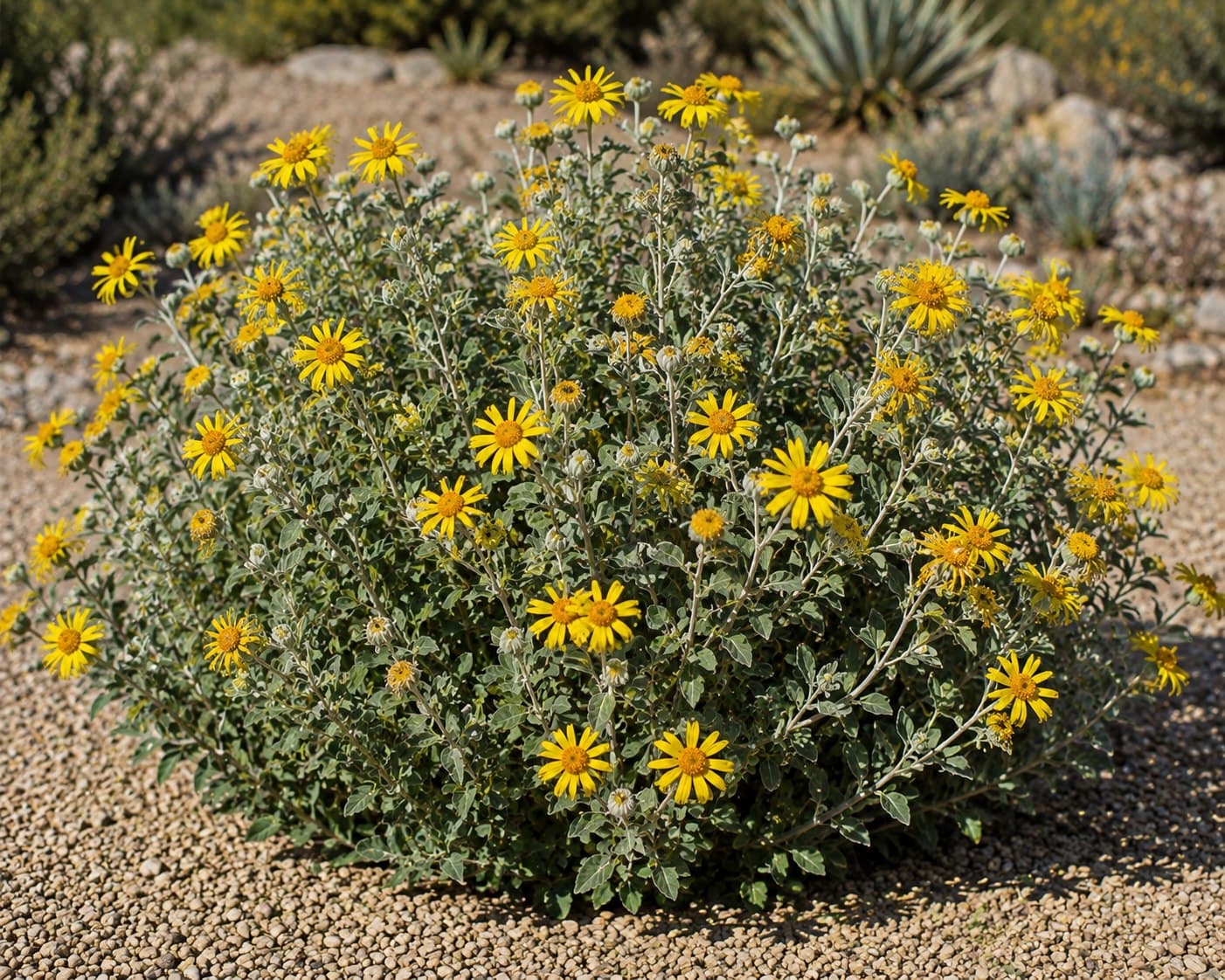
A velvety Sonoran Desert native that draws bees and butterflies with its bright yellow blooms from late spring through fall.
Hardy in USDA zones 8-11; a Sonoran and Mohave Desert native that dies back in low-desert frosts and resprouts, thriving in hot low- and mid-desert sites.
AMWUA Notes
A very low-water native legume that feeds pollinators, hosts butterfly larvae, and enriches lean desert soil.
Care Guide
Very drought tolerant — water every 2-3 weeks in summer and rarely in winter; it blooms with rainfall and needs sharp drainage.
Shear spent flowers and seedpods to prolong bloom and reduce reseeding; cut the whole plant back by a third in late winter to renew growth.
None needed; as a legume it fixes its own nitrogen and prefers lean soil.
It is a larval host for sulphur butterflies, so expect some leaf feeding by caterpillars — a benefit, not a problem.
Herbaceous to semi-woody perennial that blooms late spring through fall and dies back in hard frost; reseeds to renew short-lived plants.
Soil, Feeding & Propagation
Lean, gravelly, fast-draining desert soils; thrives in rocky and disturbed ground; as a legume it needs no rich soil.
Needs sharp, fast-draining soil.
None — thrives in lean desert soil without fertilizer.
Seed (scarify for best germination); reseeds to renew short-lived plants. Taproot makes transplanting difficult.
4 ft
Nitrogen-fixing taproot resents disturbance; short-lived but self-renews by reseeding.
Placement Tips
- •Use in a wildlife or butterfly garden where its role as a caterpillar host plant is valued.
- •Mass in natural desert plantings and let it reseed for a self-sustaining stand.
- •Combine with other Sonoran natives for a low-water habitat bed.
- •Full sun and reflected heat; needs excellent drainage and little supplemental water.
Features
Best Uses
Ecological Value
Attracts
Wildlife Value
Companion Plants



Quick Stats
Design Styles
Include in Your Project
Love Desert Senna? Our landscape team sources from wholesale nurseries and can incorporate it into your design.
Talk to a Dream BuilderGet a Project EstimateAlready a Client?
Use this care guide to maintain your Desert Senna. Questions about your landscape? Reach out anytime.
Data from 2024 AMWUA “Landscape Plants for the Arizona Desert” guide.
Desert Senna — common questions
Answers for low-desert Phoenix conditions, drawn from this plant’s growing data.
How much water does Desert Senna need in Phoenix?
Desert Senna is a low-water perennial once established. Very drought tolerant — water every 2-3 weeks in summer and rarely in winter; it blooms with rainfall and needs sharp drainage. A very low-water native legume that feeds pollinators, hosts butterfly larvae, and enriches lean desert soil.
How big does Desert Senna get?
Expect roughly 4 ft tall and 4 ft wide at maturity, with a moderate growth rate. Allow about 4 ft of spacing when planting. Nitrogen-fixing taproot resents disturbance; short-lived but self-renews by reseeding.
Can you plant Desert Senna near a pool?
Yes. Desert Senna is considered pool-friendly, meaning it stays clean enough around water features and hardscape. Litter is rated low.
Can Desert Senna handle Arizona heat and winter frost?
Desert Senna is hardy in USDA 9-11 and wants full sun. Hardy in USDA zones 8-11; a Sonoran and Mohave Desert native that dies back in low-desert frosts and resprouts, thriving in hot low- and mid-desert sites. Herbaceous to semi-woody perennial that blooms late spring through fall and dies back in hard frost; reseeds to renew short-lived plants.
Does Desert Senna have thorns?
No. Desert Senna is thornless, so it is safe alongside walkways, patios and play areas.
Is Desert Senna safe around pets?
Desert Senna is listed as pet-friendly in this guide. If your dog is a determined chewer, check any new plant with your vet before planting.
When does Desert Senna bloom in Arizona?
Desert Senna blooms in late spring-fall, with yellow flowers. The bloom draws bees, butterflies.
How much maintenance does Desert Senna need?
Desert Senna is low-maintenance. Leaf, flower and pod litter is rated low. Shear spent flowers and seedpods to prolong bloom and reduce reseeding; cut the whole plant back by a third in late winter to renew growth.
What kind of soil does Desert Senna need?
Lean, gravelly, fast-draining desert soils; thrives in rocky and disturbed ground; as a legume it needs no rich soil. It needs no supplemental feeding. None needed; as a legume it fixes its own nitrogen and prefers lean soil.
Is Desert Senna native to Arizona?
Yes. Desert Senna is native to Arizona and to the Mohave Desert, Sonoran Desert, so it is adapted to local rainfall, soil and heat.