
Kidneywood
Eysenhardtia orthocarpa
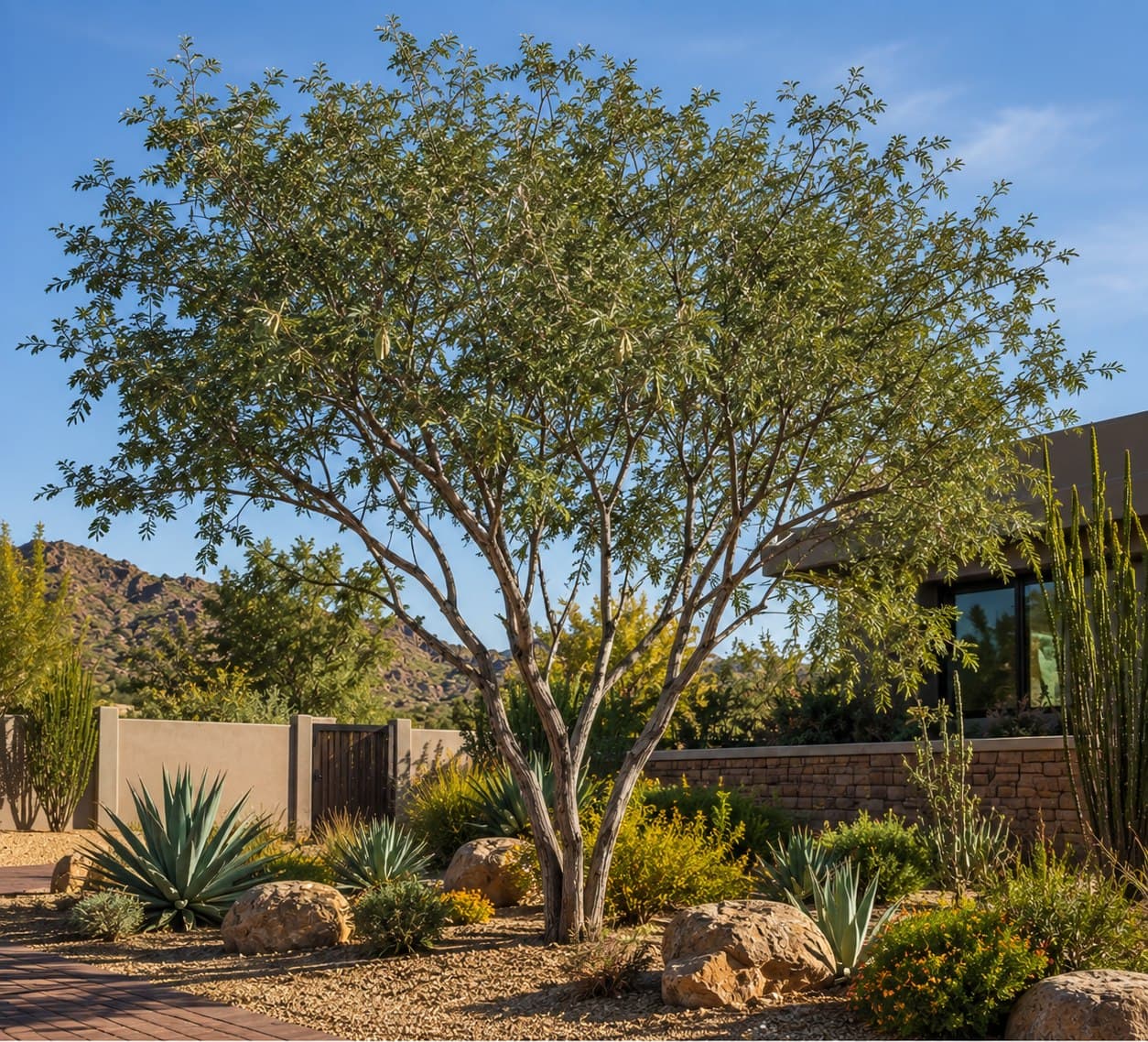
A fragrant native tree with delicate white flower spikes that attract a cloud of bees and butterflies in summer.
Cold hardy to about 10-15°F in low and mid desert; frost hardy but drops its leaves in the cold.
AMWUA Notes
Low water; a native that supports many pollinators and reblooms after summer rains.
Care Guide
Deep-soak every two weeks in summer once established; bloom flushes after monsoon rains.
Light pruning only; thin the multi-trunk form to shape into a small tree or leave shrubby, working in late winter.
No fertilizer needed; a nitrogen-fixing native.
Essentially pest-free.
Fragrant white flower spikes in summer, reblooming after rain; semi-evergreen to drought-deciduous with aromatic foliage.
Soil, Feeding & Propagation
Well-draining rocky, gravelly, or decomposed-granite soil; tolerates caliche and alkaline pH 7.5–8.5
Needs well-drained soil.
None — thrives in lean desert soil without fertilizer.
Grown from seed; establishes readily from nursery transplants
8–10 ft
Modest, non-invasive roots; safe near pools, patios, and seating
Placement Tips
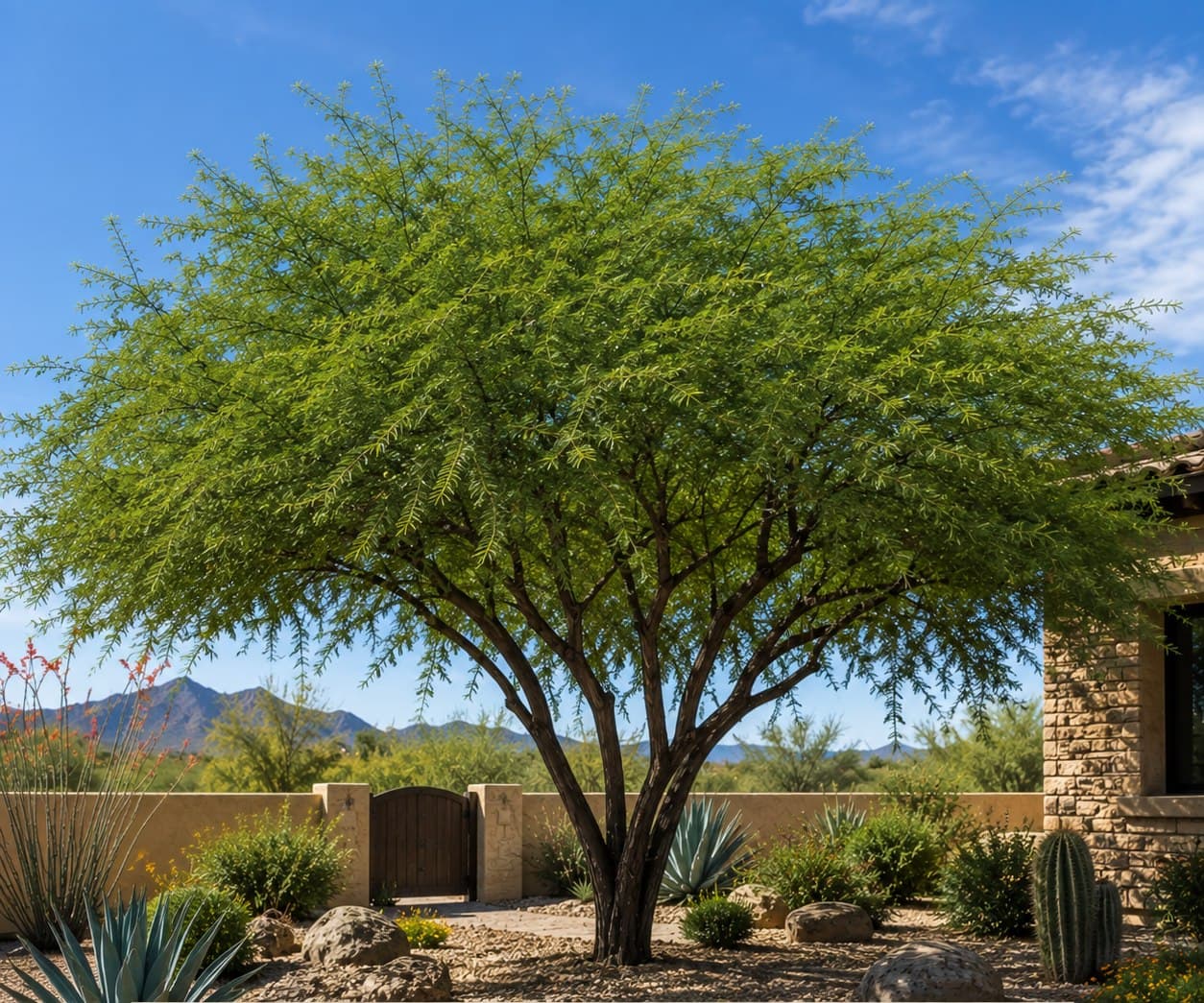
- •Small multi-trunk tree about 10 ft wide, ideal for patios and pollinator gardens.
- •Low litter and thornless, safe near pools and seating.
- •Site near patios and paths where brushing the foliage releases its citrus scent.
- •Grow as a small specimen or informal screen in full sun.
Features
Best Uses
Ecological Value
Attracts
Companion Plants


Quick Stats
Design Styles
Include in Your Project
Love Kidneywood? Our landscape team sources from wholesale nurseries and can incorporate it into your design.
Talk to a Dream BuilderGet a Project EstimateAlready a Client?
Use this care guide to maintain your Kidneywood. Questions about your landscape? Reach out anytime.
Data from 2024 AMWUA “Landscape Plants for the Arizona Desert” guide.
Kidneywood — common questions
Answers for low-desert Phoenix conditions, drawn from this plant’s growing data.
How much water does Kidneywood need in Phoenix?
Kidneywood is a low-water tree once established. Deep-soak every two weeks in summer once established; bloom flushes after monsoon rains. Low water; a native that supports many pollinators and reblooms after summer rains.
How big does Kidneywood get?
Expect roughly 15 ft tall and 10 ft wide at maturity, with a moderate growth rate. Allow about 8–10 ft of spacing when planting. Modest, non-invasive roots; safe near pools, patios, and seating.
Can you plant Kidneywood near a pool?
Yes. Kidneywood is considered pool-friendly, meaning it stays clean enough around water features and hardscape. Litter is rated low.
Can Kidneywood handle Arizona heat and winter frost?
Kidneywood is hardy in USDA 9-11 and wants full sun. Cold hardy to about 10-15°F in low and mid desert; frost hardy but drops its leaves in the cold. Fragrant white flower spikes in summer, reblooming after rain; semi-evergreen to drought-deciduous with aromatic foliage.
Does Kidneywood have thorns?
No. Kidneywood is thornless, so it is safe alongside walkways, patios and play areas.
Is Kidneywood safe around pets?
Kidneywood is listed as pet-friendly in this guide. If your dog is a determined chewer, check any new plant with your vet before planting.
When does Kidneywood bloom in Arizona?
Kidneywood blooms in summer, with white flowers. The flowers are fragrant. The bloom draws bees, butterflies.
How much maintenance does Kidneywood need?
Kidneywood is low-maintenance. Leaf, flower and pod litter is rated low. Light pruning only; thin the multi-trunk form to shape into a small tree or leave shrubby, working in late winter.
What kind of soil does Kidneywood need?
Well-draining rocky, gravelly, or decomposed-granite soil; tolerates caliche and alkaline pH 7.5–8.5. It needs no supplemental feeding. No fertilizer needed; a nitrogen-fixing native.
Is Kidneywood native to Arizona?
Yes. Kidneywood is native to Arizona and to the Southeastern AZ, Southwestern NM, Sonora, Chihuahua, Mexico, so it is adapted to local rainfall, soil and heat.