
Mexican Bird of Paradise
Erythrostemon mexicanus
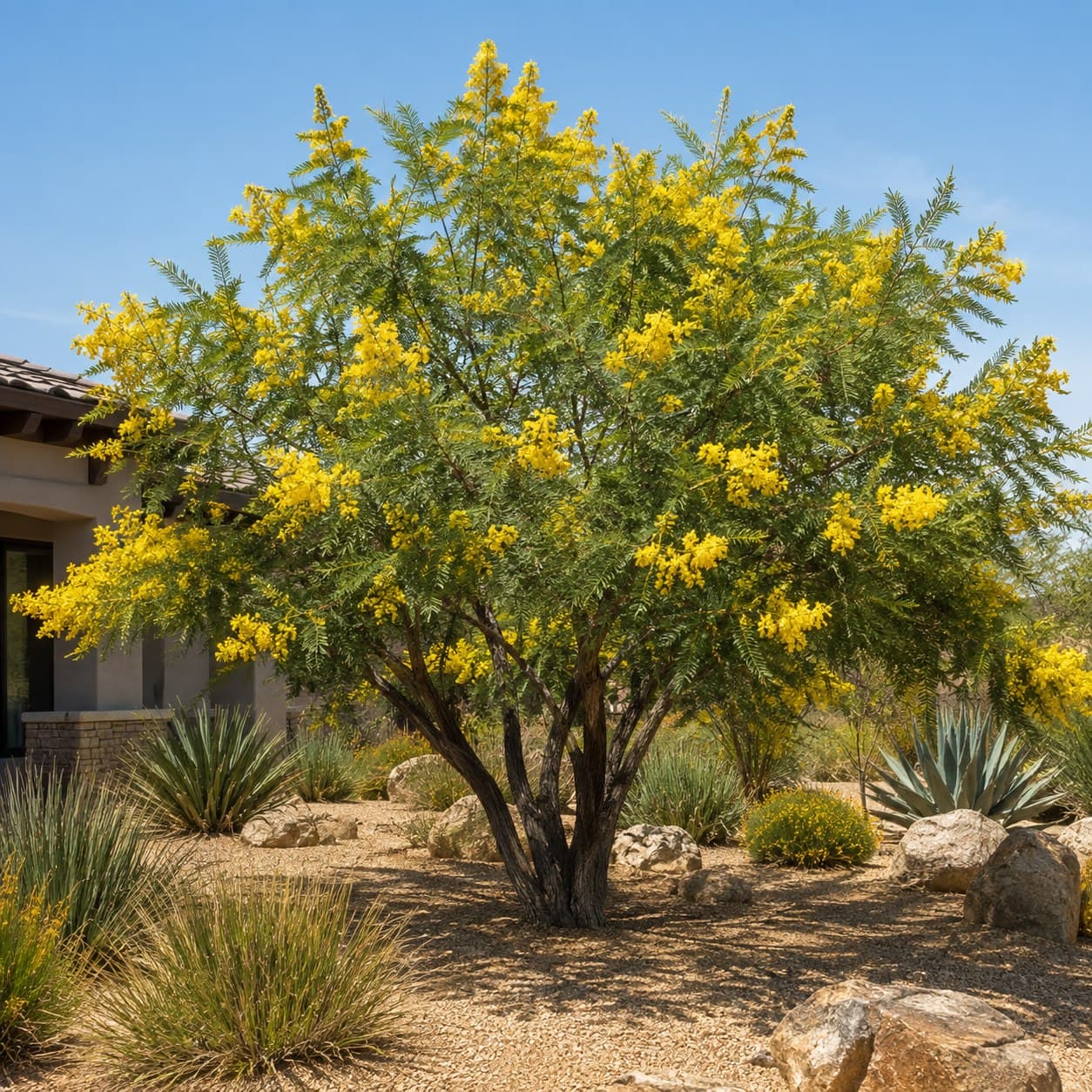
A prolific bloomer with showy yellow flower spikes nearly year-round, irresistible to hummingbirds.
Root-hardy to about 15-20°F in low and mid desert; tops freeze back in hard frost and regrow vigorously in spring.
AMWUA Notes
Moderate water; blooms hardest with regular irrigation and an annual hard pruning.
Care Guide
Deep-soak weekly in summer for continuous bloom and every two weeks in cooler months; more water yields more flowers.
Cut back hard in late winter to renew and control size; deadhead and remove seed pods to prolong bloom and reduce litter.
A light balanced feeding in spring supports the heavy bloom.
Generally pest-free; occasional whitefly.
Yellow flower spikes appear nearly year-round with a warm-season peak; evergreen in mild winters, freezing back in hard frost.
Soil, Feeding & Propagation
Well-draining native or decomposed-granite soil; tolerates caliche, rocky ground, and alkaline pH 7.5–8.5
Needs well-drained soil.
Low feeder.
Grown easily from scarified seed; self-sows in the garden
8–10 ft
Shallow, non-invasive roots; safe near hardscape, but keep back from pool skimmers for heavy seed-pod drop
Placement Tips
- •About 10 ft as an informal color and hummingbird accent; give it 8-10 ft of spread room.
- •Drops heavy seed-pod litter, so keep it back from pool edges and skimmers despite its clean foliage.
- •Train up to a small multi-trunk tree or keep as a large shrub.
- •Full sun produces the heaviest, most continuous bloom.
Features
Best Uses
Ecological Value
Attracts
Companion Plants


Quick Stats
Design Styles
Include in Your Project
Love Mexican Bird of Paradise? Our landscape team sources from wholesale nurseries and can incorporate it into your design.
Talk to a Dream BuilderGet a Project EstimateAlready a Client?
Use this care guide to maintain your Mexican Bird of Paradise. Questions about your landscape? Reach out anytime.
Data from 2024 AMWUA “Landscape Plants for the Arizona Desert” guide.
Mexican Bird of Paradise — common questions
Answers for low-desert Phoenix conditions, drawn from this plant’s growing data.
How much water does Mexican Bird of Paradise need in Phoenix?
Mexican Bird of Paradise is a moderate-water tree once established. Deep-soak weekly in summer for continuous bloom and every two weeks in cooler months; more water yields more flowers. Moderate water; blooms hardest with regular irrigation and an annual hard pruning.
How big does Mexican Bird of Paradise get?
Expect roughly 15 ft tall and 10 ft wide at maturity, with a moderate growth rate. Allow about 8–10 ft of spacing when planting. Shallow, non-invasive roots; safe near hardscape, but keep back from pool skimmers for heavy seed-pod drop.
Can you plant Mexican Bird of Paradise near a pool?
Yes. Mexican Bird of Paradise is considered pool-friendly, meaning it stays clean enough around water features and hardscape. Litter is rated high.
Can Mexican Bird of Paradise handle Arizona heat and winter frost?
Mexican Bird of Paradise is hardy in USDA 9-11 and wants full sun. Root-hardy to about 15-20°F in low and mid desert; tops freeze back in hard frost and regrow vigorously in spring. Yellow flower spikes appear nearly year-round with a warm-season peak; evergreen in mild winters, freezing back in hard frost.
Does Mexican Bird of Paradise have thorns?
No. Mexican Bird of Paradise is thornless, so it is safe alongside walkways, patios and play areas.
Is Mexican Bird of Paradise safe around pets?
Mexican Bird of Paradise is listed as pet-friendly in this guide. If your dog is a determined chewer, check any new plant with your vet before planting.
When does Mexican Bird of Paradise bloom in Arizona?
Mexican Bird of Paradise blooms in year-round, with yellow flowers. The bloom draws hummingbirds.
How much maintenance does Mexican Bird of Paradise need?
Mexican Bird of Paradise is high-maintenance. Leaf, flower and pod litter is rated high. Cut back hard in late winter to renew and control size; deadhead and remove seed pods to prolong bloom and reduce litter.
What kind of soil does Mexican Bird of Paradise need?
Well-draining native or decomposed-granite soil; tolerates caliche, rocky ground, and alkaline pH 7.5–8.5. Nutrient needs are low. A light balanced feeding in spring supports the heavy bloom.
Is Mexican Bird of Paradise native to Arizona?
No. Mexican Bird of Paradise is not an Arizona native; it originates from the Mexico, but it is grown successfully in low-desert landscapes here.