
Trailing Acacia
Acacia redolens

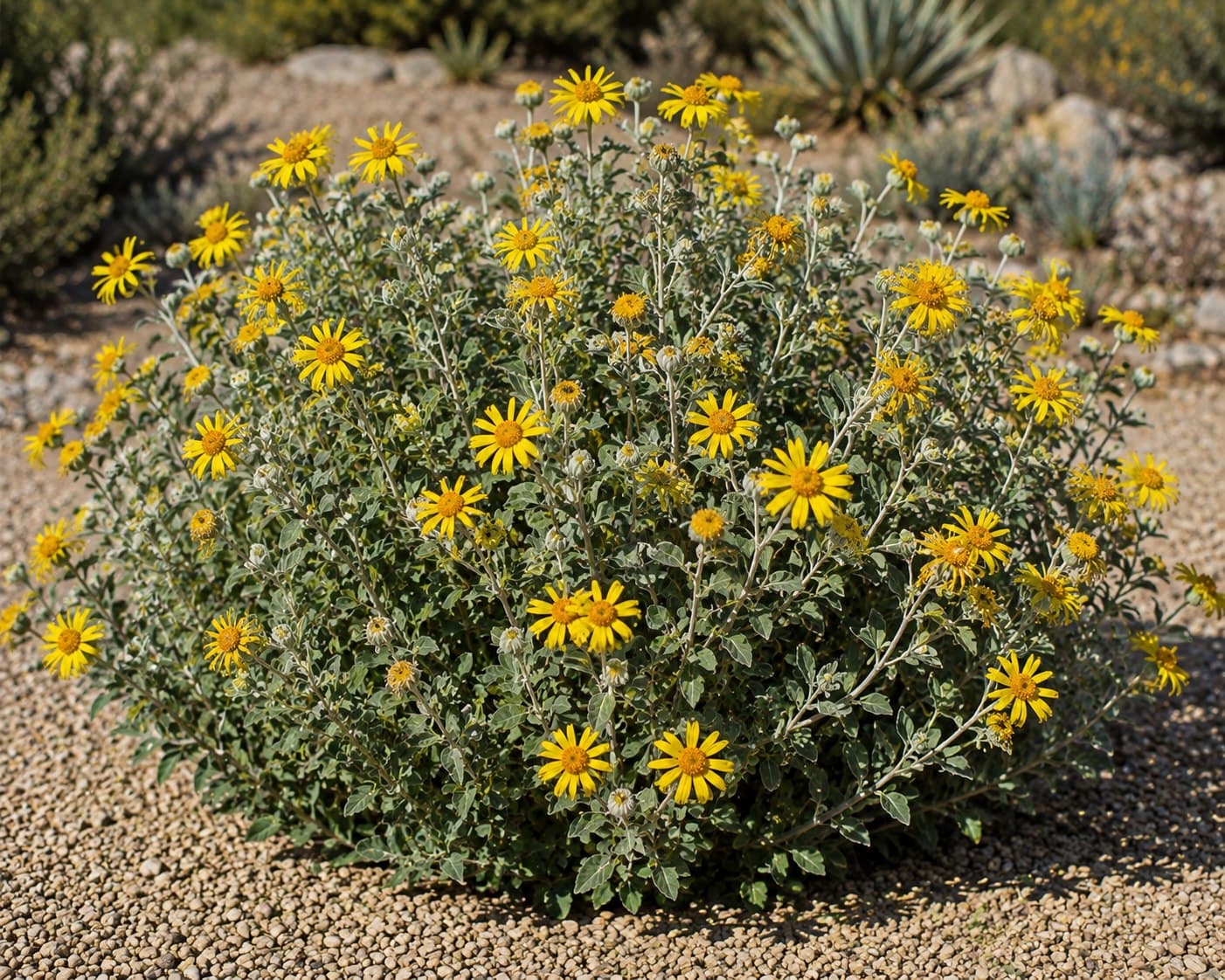
A tough Australian groundcover valued for erosion control on banks with fragrant small yellow flowers in early spring.
Hardy in USDA zones 9-11 and evergreen through low-desert winters, tolerating brief dips to about 15-20°F with little dieback while shrugging off extreme summer heat.
AMWUA Notes
A vigorous slope stabilizer; the Desert Carpet cultivar stays lower and uses less water than open-pollinated forms.
Care Guide
Water deeply every 7-10 days through the first summer to establish the wide root system, then taper to every 2-3 weeks; the low cultivar Desert Carpet is far more drought tolerant than seed-grown plants.
Shear back trailing tips once or twice a year to keep it flat and dense and to stop it mounding into a shrub; remove any upright reverted branches at the base.
As a nitrogen-fixing legume it needs little feeding; a single light application of balanced fertilizer in early spring is plenty on poor soils.
Largely pest-free in the desert; watch for root rot where drainage is poor or irrigation is excessive.
Fragrant yellow puffball flowers appear in late winter to early spring; expect no meaningful frost damage in the low desert.
Soil, Feeding & Propagation
Adapts to most well-drained desert soils including decomposed granite, rocky, and sandy loams; tolerant of poor, alkaline, and saline ground but not soggy soil.
Needs well-drained soil.
Low feeder.
Semi-hardwood tip cuttings; the low Desert Carpet cultivar is grown from cuttings to stay prostrate, while the species also comes from scarified seed.
6-8 ft on center for erosion-controlling coverage
Deep, soil-binding roots are not invasive, but each plant spreads 8-10 ft wide, so keep well back from walks, pool decks, and turf edges.
Placement Tips
- •Space plants 6-8 ft apart on banks and slopes for full erosion-controlling coverage within two seasons.
- •Excellent on decomposed-granite slopes and along freeway-style embankments where its wide spread anchors soil.
- •Give it full sun and room to run; crowding it against walks forces constant shearing.
- •Keep set back from pool decks and walkways since a single plant can spread 8-10 ft wide.
Features
Best Uses
Ecological Value
Attracts
Wildlife Value
Companion Plants


Quick Stats
Design Styles
Include in Your Project
Love Trailing Acacia? Our landscape team sources from wholesale nurseries and can incorporate it into your design.
Talk to a Dream BuilderGet a Project EstimateAlready a Client?
Use this care guide to maintain your Trailing Acacia. Questions about your landscape? Reach out anytime.
Data from 2024 AMWUA “Landscape Plants for the Arizona Desert” guide.
Trailing Acacia — common questions
Answers for low-desert Phoenix conditions, drawn from this plant’s growing data.
How much water does Trailing Acacia need in Phoenix?
Trailing Acacia is a low-water groundcover once established. Water deeply every 7-10 days through the first summer to establish the wide root system, then taper to every 2-3 weeks; the low cultivar Desert Carpet is far more drought tolerant than seed-grown plants. A vigorous slope stabilizer; the Desert Carpet cultivar stays lower and uses less water than open-pollinated forms.
How big does Trailing Acacia get?
Expect roughly 2 ft tall and 10 ft wide at maturity, with a moderate growth rate. Allow about 6-8 ft on center for erosion-controlling coverage of spacing when planting. Deep, soil-binding roots are not invasive, but each plant spreads 8-10 ft wide, so keep well back from walks, pool decks, and turf edges.
Can you plant Trailing Acacia near a pool?
Yes. Trailing Acacia is considered pool-friendly, meaning it stays clean enough around water features and hardscape. Litter is rated low.
Can Trailing Acacia handle Arizona heat and winter frost?
Trailing Acacia is hardy in USDA 9-11 and wants full sun. Hardy in USDA zones 9-11 and evergreen through low-desert winters, tolerating brief dips to about 15-20°F with little dieback while shrugging off extreme summer heat. Fragrant yellow puffball flowers appear in late winter to early spring; expect no meaningful frost damage in the low desert.
Does Trailing Acacia have thorns?
No. Trailing Acacia is thornless, so it is safe alongside walkways, patios and play areas.
Is Trailing Acacia safe around pets?
Trailing Acacia is listed as pet-friendly in this guide. If your dog is a determined chewer, check any new plant with your vet before planting.
When does Trailing Acacia bloom in Arizona?
Trailing Acacia blooms in early spring, with yellow flowers. The bloom draws bees.
How much maintenance does Trailing Acacia need?
Trailing Acacia is low-maintenance. Leaf, flower and pod litter is rated low. Shear back trailing tips once or twice a year to keep it flat and dense and to stop it mounding into a shrub; remove any upright reverted branches at the base.
What kind of soil does Trailing Acacia need?
Adapts to most well-drained desert soils including decomposed granite, rocky, and sandy loams; tolerant of poor, alkaline, and saline ground but not soggy soil. Nutrient needs are low. As a nitrogen-fixing legume it needs little feeding; a single light application of balanced fertilizer in early spring is plenty on poor soils.
Is Trailing Acacia native to Arizona?
No. Trailing Acacia is not an Arizona native; it originates from the Australia, but it is grown successfully in low-desert landscapes here.