
Trailing Desert Broom
Baccharis hybrid (male)

A male hybrid groundcover that thrives in tough conditions and produces no allergenic seed fluff.
Reliably evergreen in USDA zones 9-11, this heat-loving low-desert plant tolerates hard freezes into the low teens without significant dieback.
AMWUA Notes
A very low-water, tough-site groundcover; being a sterile male clone it avoids the invasive seeding of wild desert broom.
Care Guide
Water every 10-14 days to establish, then only every 3-4 weeks once rooted; it tolerates poor drainage and reflected heat better than most groundcovers.
Shear hard nearly to the ground in late winter every year or two to renew dense foliage and remove woody buildup; light tip-shearing controls spread otherwise.
Rarely needs fertilizer; skip feeding entirely in native or low-water beds to avoid rank growth.
Essentially pest-free; the cultivars Centennial and Starn are chosen for toughness in disturbed and roadside soils.
Small white flowers appear in fall on this male clone, which sets no messy wind-blown seed fluff; stays green year-round with no frost dieback.
Soil, Feeding & Propagation
Thrives in poor, compacted, disturbed, or rocky desert soils; highly tolerant of alkaline and saline conditions and reflected heat.
Needs moderate soil.
None — thrives in lean desert soil without fertilizer.
Cuttings only, since the desirable plants are sterile male clones (Centennial, Starn) that set no viable seed.
4-5 ft on center for a solid mass
Non-aggressive fibrous roots; a sterile male clone, so no invasive self-seeding like wild desert broom.
Placement Tips
- •Space 4-5 ft apart for a solid low-water mass in medians, parking islands, and hot exposed sites.
- •Ideal for compacted or disturbed soils and slopes where fussier groundcovers fail.
- •Plant male clones only near patios to avoid the allergenic seed fluff of female desert broom.
- •Site in full sun and reflected heat; it tolerates the harshest western exposures.
Features
Best Uses
Ecological Value
Attracts
Wildlife Value
Companion Plants

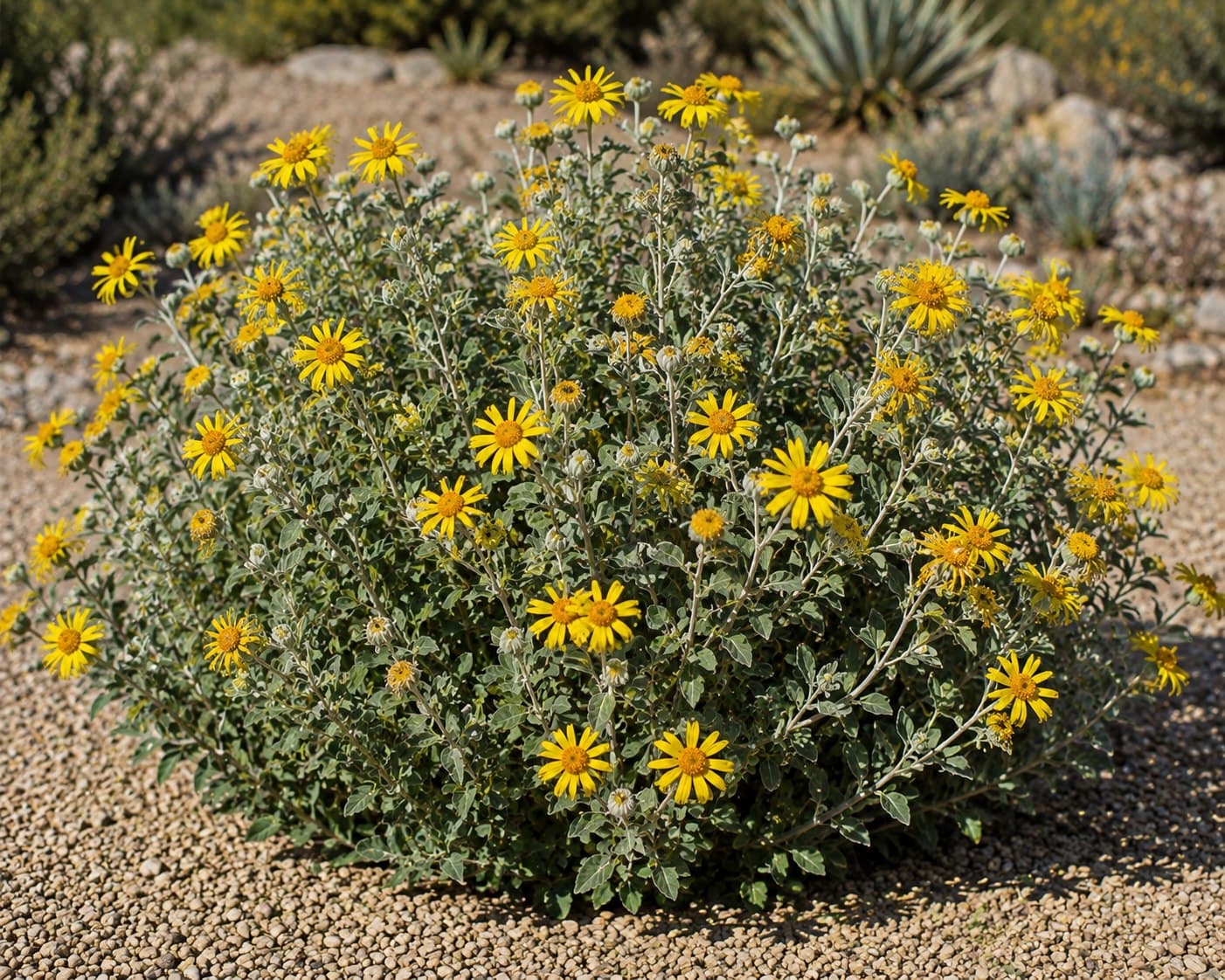


Quick Stats
Design Styles
Include in Your Project
Love Trailing Desert Broom? Our landscape team sources from wholesale nurseries and can incorporate it into your design.
Talk to a Dream BuilderGet a Project EstimateAlready a Client?
Use this care guide to maintain your Trailing Desert Broom. Questions about your landscape? Reach out anytime.
Data from 2024 AMWUA “Landscape Plants for the Arizona Desert” guide.
Trailing Desert Broom — common questions
Answers for low-desert Phoenix conditions, drawn from this plant’s growing data.
How much water does Trailing Desert Broom need in Phoenix?
Trailing Desert Broom is a low-water groundcover once established. Water every 10-14 days to establish, then only every 3-4 weeks once rooted; it tolerates poor drainage and reflected heat better than most groundcovers. A very low-water, tough-site groundcover; being a sterile male clone it avoids the invasive seeding of wild desert broom.
How big does Trailing Desert Broom get?
Expect roughly 3 ft tall and 4 ft wide at maturity, with a moderate growth rate. Allow about 4-5 ft on center for a solid mass of spacing when planting. Non-aggressive fibrous roots; a sterile male clone, so no invasive self-seeding like wild desert broom.
Can you plant Trailing Desert Broom near a pool?
Yes. Trailing Desert Broom is considered pool-friendly, meaning it stays clean enough around water features and hardscape. Litter is rated low.
Can Trailing Desert Broom handle Arizona heat and winter frost?
Trailing Desert Broom is hardy in USDA 9-11 and wants full sun. Reliably evergreen in USDA zones 9-11, this heat-loving low-desert plant tolerates hard freezes into the low teens without significant dieback. Small white flowers appear in fall on this male clone, which sets no messy wind-blown seed fluff; stays green year-round with no frost dieback.
Does Trailing Desert Broom have thorns?
No. Trailing Desert Broom is thornless, so it is safe alongside walkways, patios and play areas.
Is Trailing Desert Broom safe around pets?
Trailing Desert Broom is listed as pet-friendly in this guide. If your dog is a determined chewer, check any new plant with your vet before planting.
When does Trailing Desert Broom bloom in Arizona?
Trailing Desert Broom blooms in fall, with white flowers. The bloom draws bees.
How much maintenance does Trailing Desert Broom need?
Trailing Desert Broom is low-maintenance. Leaf, flower and pod litter is rated low. Shear hard nearly to the ground in late winter every year or two to renew dense foliage and remove woody buildup; light tip-shearing controls spread otherwise.
What kind of soil does Trailing Desert Broom need?
Thrives in poor, compacted, disturbed, or rocky desert soils; highly tolerant of alkaline and saline conditions and reflected heat. It needs no supplemental feeding. Rarely needs fertilizer; skip feeding entirely in native or low-water beds to avoid rank growth.
Is Trailing Desert Broom native to Arizona?
No. Trailing Desert Broom is not an Arizona native; it originates from the Horticultural hybrid, but it is grown successfully in low-desert landscapes here.