
Bee Brush
Aloysia gratissima
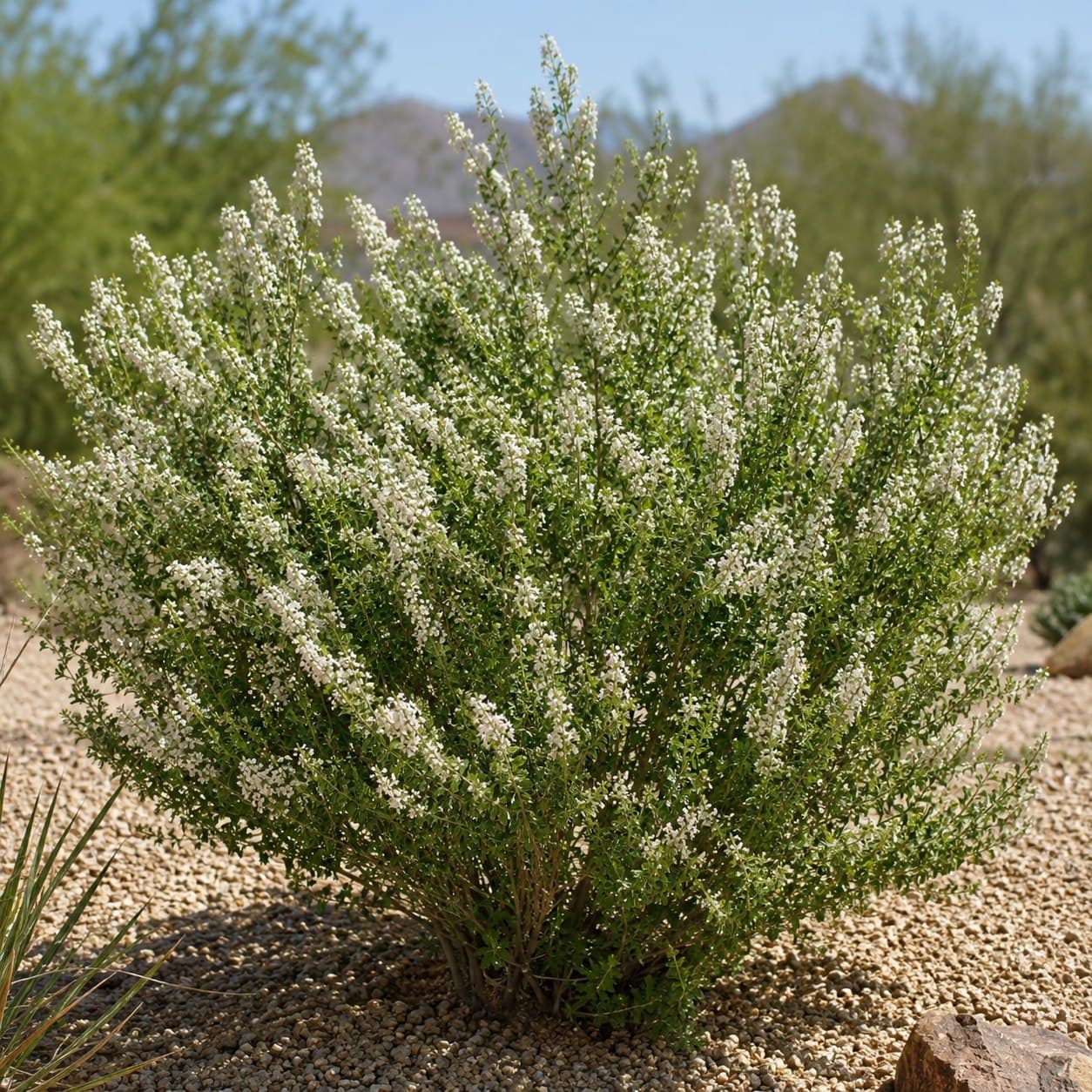
A fragrant shrub from the Chihuahuan Desert that attracts abundant bees and butterflies with its scented orange-red flowers.
Cold-hardy in USDA zones 9-11; tops may freeze below the mid-20s but roots survive low-desert winters, and it excels in intense summer heat.
AMWUA Notes
A low-water Chihuahuan shrub whose bloom is flush-driven by irrigation; a deep soak followed by drying reliably triggers fragrant flowering.
Care Guide
Water deeply but infrequently, roughly every 10-14 days in summer once established; it blooms in flushes triggered by rain or irrigation.
This shrub flowers on new growth, so cut it back hard in late winter to keep it dense and encourage repeat bloom flushes; it tolerates rejuvenation pruning well.
Light spring feeding is optional; native soils generally supply enough.
Rarely troubled by pests thanks to its aromatic foliage, which most browsing insects and animals avoid.
Deciduous in winter and may freeze to the ground in a hard frost, resprouting vigorously in spring; sweetly vanilla-scented flowers appear after summer rains.
Soil, Feeding & Propagation
Well-drained rocky or sandy soils; tolerant of alkaline, caliche-laden ground at pH 7.5-8.5.
Needs well-drained soil.
Low feeder.
From softwood or semi-hardwood cuttings; also grows from seed.
5-6 ft
Non-aggressive roots; safe near structures and paving.
Placement Tips
- •Allow a 6 ft spread; space plants 5-6 ft apart or use singly as a fragrant specimen near seating.
- •Site along walkways or patios where its honey-vanilla scent can be enjoyed, but note it can look twiggy and open, so pair with fuller shrubs.
- •Keep away from pool edges since flower and leaf drop plus heavy bee traffic are undesirable poolside.
- •Excellent in a dedicated pollinator or wildlife border where its bee magnetism is a feature.
Features
Best Uses
Ecological Value
Attracts
Wildlife Value
Companion Plants


Quick Stats
Design Styles
Include in Your Project
Love Bee Brush? Our landscape team sources from wholesale nurseries and can incorporate it into your design.
Talk to a Dream BuilderGet a Project EstimateAlready a Client?
Use this care guide to maintain your Bee Brush. Questions about your landscape? Reach out anytime.
Data from 2024 AMWUA “Landscape Plants for the Arizona Desert” guide.
Bee Brush — common questions
Answers for low-desert Phoenix conditions, drawn from this plant’s growing data.
How much water does Bee Brush need in Phoenix?
Bee Brush is a low-water shrub once established. Water deeply but infrequently, roughly every 10-14 days in summer once established; it blooms in flushes triggered by rain or irrigation. A low-water Chihuahuan shrub whose bloom is flush-driven by irrigation; a deep soak followed by drying reliably triggers fragrant flowering.
How big does Bee Brush get?
Expect roughly 6 ft tall and 6 ft wide at maturity, with a moderate growth rate. Allow about 5-6 ft of spacing when planting. Non-aggressive roots; safe near structures and paving.
Can you plant Bee Brush near a pool?
Not ideally. Bee Brush is not rated pool-friendly, so it is better placed away from the pool deck and skimmer. Litter is rated low.
Can Bee Brush handle Arizona heat and winter frost?
Bee Brush is hardy in USDA 9-11 and wants full sun. Cold-hardy in USDA zones 9-11; tops may freeze below the mid-20s but roots survive low-desert winters, and it excels in intense summer heat. Deciduous in winter and may freeze to the ground in a hard frost, resprouting vigorously in spring; sweetly vanilla-scented flowers appear after summer rains.
Does Bee Brush have thorns?
No. Bee Brush is thornless, so it is safe alongside walkways, patios and play areas.
Is Bee Brush safe around pets?
Bee Brush is listed as pet-friendly in this guide. If your dog is a determined chewer, check any new plant with your vet before planting.
When does Bee Brush bloom in Arizona?
Bee Brush blooms in summer-late fall, with orange-red flowers. The flowers are fragrant. The bloom draws bees, butterflies.
How much maintenance does Bee Brush need?
Bee Brush is low-maintenance. Leaf, flower and pod litter is rated low. This shrub flowers on new growth, so cut it back hard in late winter to keep it dense and encourage repeat bloom flushes; it tolerates rejuvenation pruning well.
What kind of soil does Bee Brush need?
Well-drained rocky or sandy soils; tolerant of alkaline, caliche-laden ground at pH 7.5-8.5. Nutrient needs are low. Light spring feeding is optional; native soils generally supply enough.
Is Bee Brush native to Arizona?
No. Bee Brush is not an Arizona native; it originates from the Chihuahuan Desert, South America, but it is grown successfully in low-desert landscapes here.