
Texas Honey Mesquite
Prosopis glandulosa
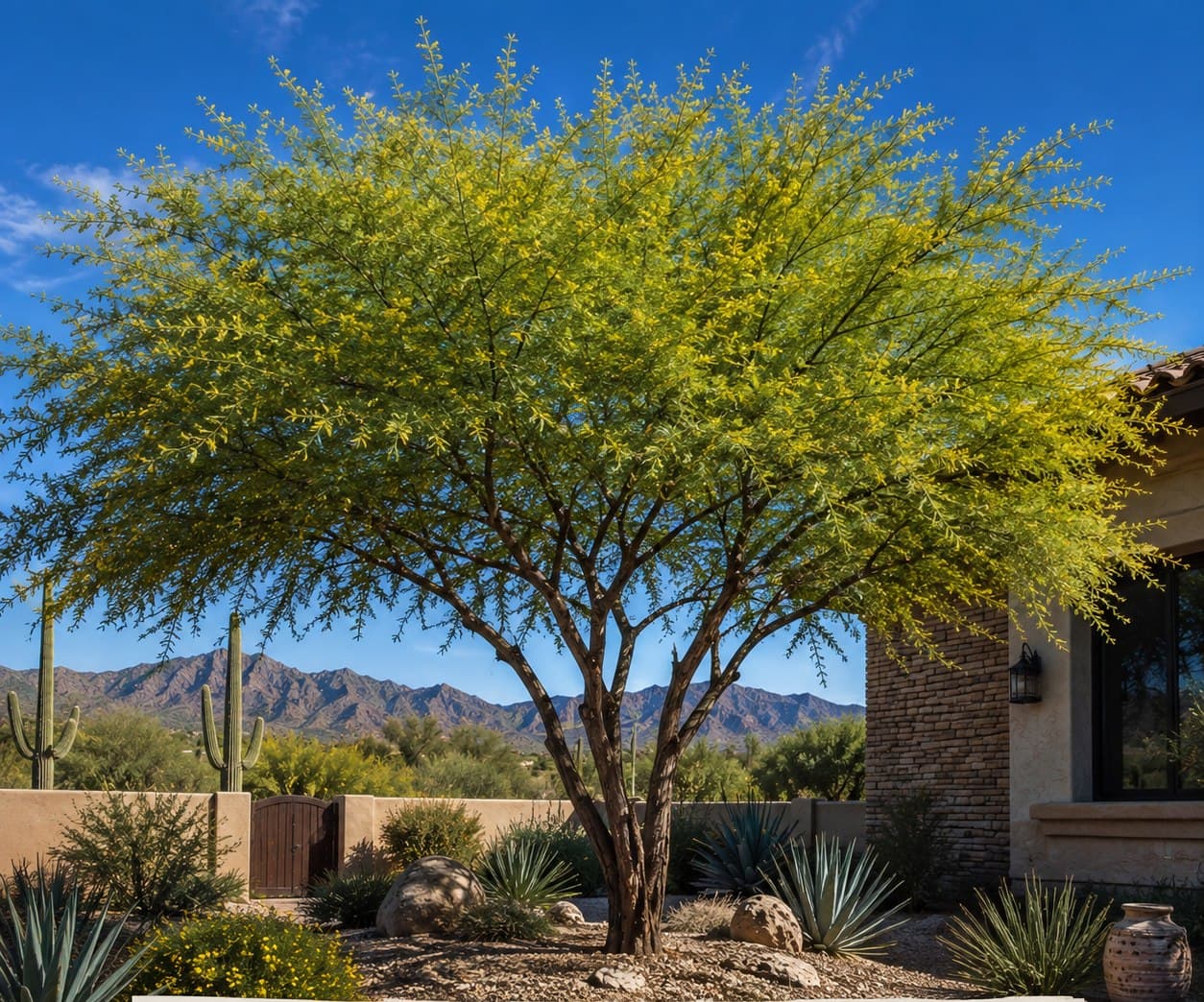
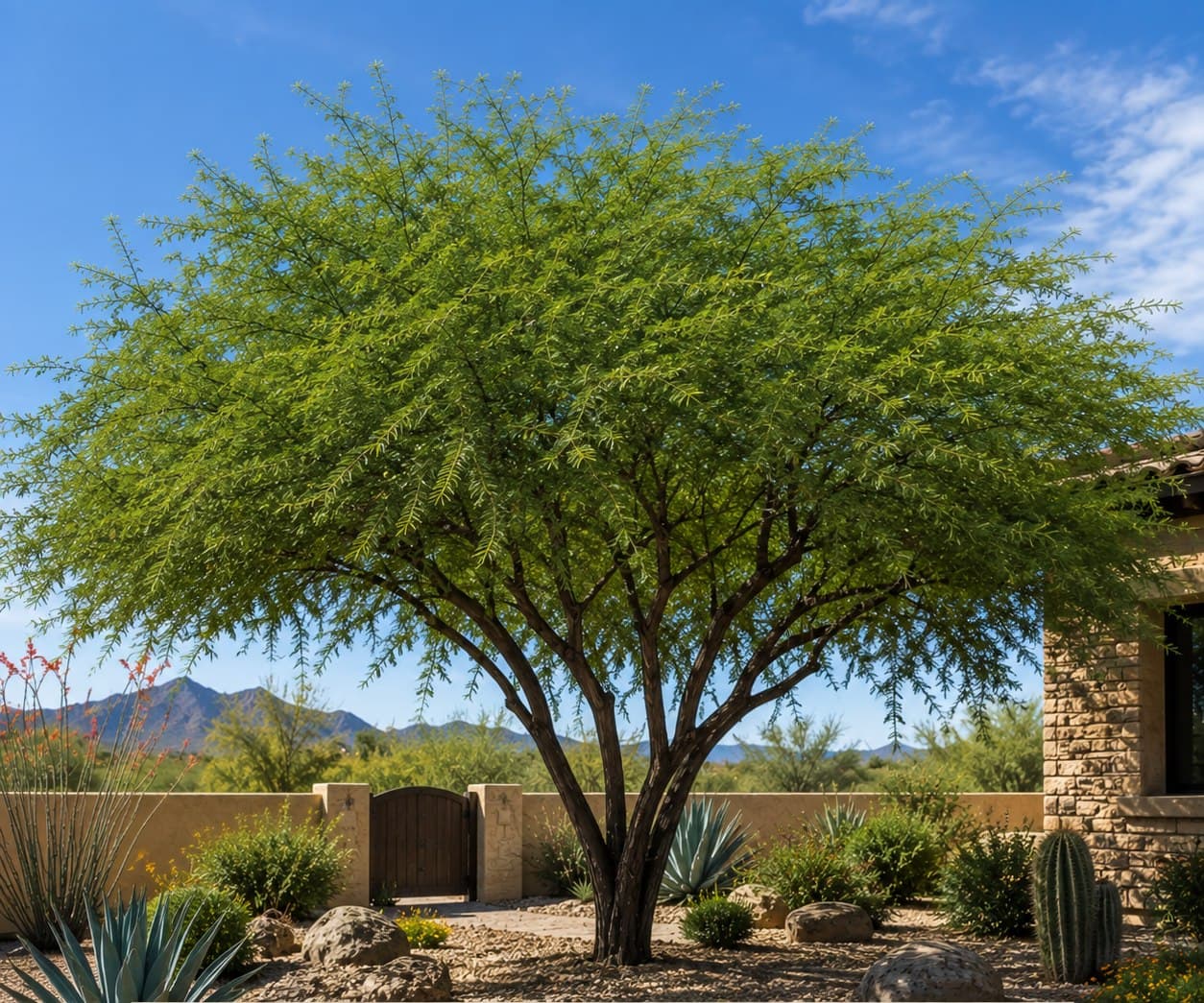
A spreading native mesquite that provides generous shade and critical habitat for bees, birds, and wildlife.
Cold hardy to near 0°F, a very heat- and frost-tolerant native from low to high desert.
AMWUA Notes
Deep infrequent watering builds wind-firm roots; overwatering causes hazardous fast growth prone to storm breakage.
Care Guide
Deep-soak every two weeks in summer to drive growth, but favor deep infrequent watering to anchor roots and prevent blow-over.
Prune in late winter to build a strong scaffold and thin the canopy to reduce wind-throw; wear gloves for the variable thorns and avoid over-thinning.
No fertilizer needed; overwatering and feeding produce weak, storm-prone growth on this nitrogen-fixer.
Giant mesquite bug (cosmetic) and mistletoe.
Yellow-green catkins in spring with heavy allergen pollen; deciduous in winter with messy leaf and pod drop.
Soil, Feeding & Propagation
Adaptable, well-draining native soil; tolerates caliche, clay, rocky ground, and alkaline pH 7.5–8.5
Needs moderate soil.
None — thrives in lean desert soil without fertilizer.
Grown easily from scarified seed; self-sows readily
25–30 ft
Deep taproot plus aggressive water-seeking laterals; keep 20+ ft from pools, foundations, sewer, and paving
Placement Tips
- •Broad 30 ft canopy for shade; give it 20+ ft from structures and pools because of pods, variable thorns, and heavy pollen.
- •Deep taproot; stake and thin young trees so they resist monsoon winds.
- •Not pool friendly due to messy litter and pollen; best in native or large-lot landscapes.
- •Full sun; a keystone wildlife tree.
Features
Best Uses
Ecological Value
Attracts
Wildlife Value
Companion Plants


Quick Stats
Design Styles
Include in Your Project
Love Texas Honey Mesquite? Our landscape team sources from wholesale nurseries and can incorporate it into your design.
Talk to a Dream BuilderGet a Project EstimateAlready a Client?
Use this care guide to maintain your Texas Honey Mesquite. Questions about your landscape? Reach out anytime.
Data from 2024 AMWUA “Landscape Plants for the Arizona Desert” guide.
Texas Honey Mesquite — common questions
Answers for low-desert Phoenix conditions, drawn from this plant’s growing data.
How much water does Texas Honey Mesquite need in Phoenix?
Texas Honey Mesquite is a low-water tree once established. Deep-soak every two weeks in summer to drive growth, but favor deep infrequent watering to anchor roots and prevent blow-over. Deep infrequent watering builds wind-firm roots; overwatering causes hazardous fast growth prone to storm breakage.
How big does Texas Honey Mesquite get?
Expect roughly 30 ft tall and 30 ft wide at maturity, with a moderate growth rate. Allow about 25–30 ft of spacing when planting. Deep taproot plus aggressive water-seeking laterals; keep 20+ ft from pools, foundations, sewer, and paving.
Can you plant Texas Honey Mesquite near a pool?
Not ideally. Texas Honey Mesquite is not rated pool-friendly, so it is better placed away from the pool deck and skimmer. Litter is rated seasonal.
Can Texas Honey Mesquite handle Arizona heat and winter frost?
Texas Honey Mesquite is hardy in USDA 9-11 and wants full sun. Cold hardy to near 0°F, a very heat- and frost-tolerant native from low to high desert. Yellow-green catkins in spring with heavy allergen pollen; deciduous in winter with messy leaf and pod drop.
Does Texas Honey Mesquite have thorns?
Yes — Texas Honey Mesquite has variable thorns. Site it back from walkways, seating and pool decks where people brush past.
Is Texas Honey Mesquite safe around pets?
Texas Honey Mesquite is listed as pet-friendly in this guide. If your dog is a determined chewer, check any new plant with your vet before planting.
When does Texas Honey Mesquite bloom in Arizona?
Texas Honey Mesquite blooms in spring, with yellow-green flowers. The bloom draws bees.
How much maintenance does Texas Honey Mesquite need?
Texas Honey Mesquite is moderate-maintenance. Leaf, flower and pod litter is rated seasonal. Prune in late winter to build a strong scaffold and thin the canopy to reduce wind-throw; wear gloves for the variable thorns and avoid over-thinning.
What kind of soil does Texas Honey Mesquite need?
Adaptable, well-draining native soil; tolerates caliche, clay, rocky ground, and alkaline pH 7.5–8.5. It needs no supplemental feeding. No fertilizer needed; overwatering and feeding produce weak, storm-prone growth on this nitrogen-fixer.
Is Texas Honey Mesquite native to Arizona?
Yes. Texas Honey Mesquite is native to Arizona and to the Southwestern US, Northern Mexico, so it is adapted to local rainfall, soil and heat.