
Texas Mountain Laurel
Dermatophyllum secundiflorum
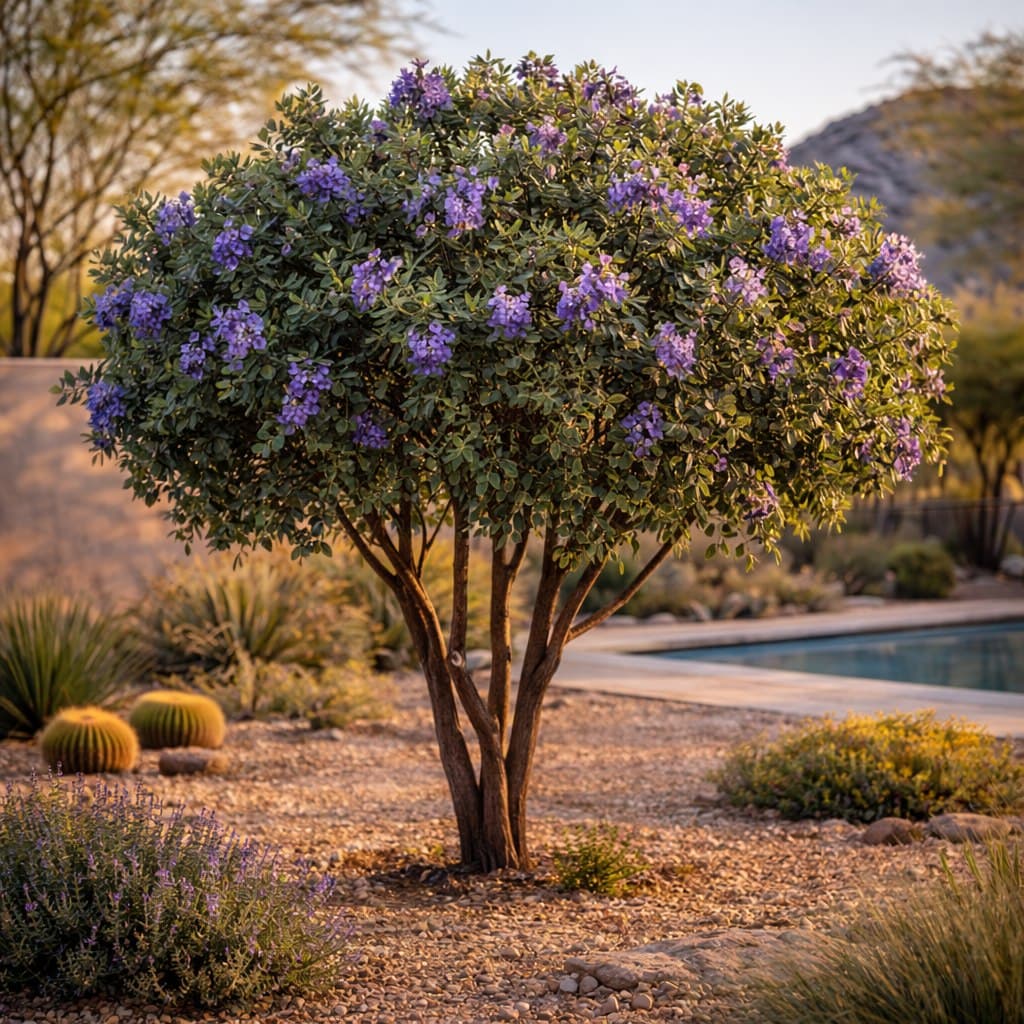
A slow-growing evergreen tree with intensely fragrant purple blooms that smell like grape soda, a true desert garden gem.
Hardy to about 10°F in low and mid desert; evergreen, frost hardy, and heat-loving.
AMWUA Notes
Fruits are poisonous.
Care Guide
Deep-soak every 2-3 weeks in summer once established; a slow grower that resents overwatering.
Prune just after spring bloom since flowers form on old wood; remove seed pods and shape as a tree or shrub.
Light feeding only; tolerates poor soils as a nitrogen-fixing legume.
Watch for genista (sophora) caterpillars chewing new growth; hand-pick or treat with Bt.
Intensely grape-scented purple flowers in early spring; glossy evergreen foliage with toxic red seeds.
Soil, Feeding & Propagation
Sharply draining rocky, limestone, or decomposed-granite soil; thrives in alkaline caliche pH 7.5–8.5 and fails in soggy ground
Needs sharp, fast-draining soil.
Low feeder.
Grown from scarified seed (hard coat); slow to establish and resents root disturbance
6–8 ft
Deep, slow, non-invasive roots are foundation-safe; site the toxic red seeds away from play areas
Placement Tips
- •Slow-growing to about 8 ft; use as an evergreen screen or specimen near entries and patios to enjoy the grape-soda fragrance.
- •Low litter and thornless, safe near pools and seating.
- •The hard red seeds are toxic, so site away from areas where pets or children play.
- •Tolerates reflected heat and west exposure; requires excellent drainage.
Features
Best Uses
Ecological Value
Attracts
Companion Plants


Quick Stats
Design Styles
Include in Your Project
Love Texas Mountain Laurel? Our landscape team sources from wholesale nurseries and can incorporate it into your design.
Talk to a Dream BuilderGet a Project EstimateAlready a Client?
Use this care guide to maintain your Texas Mountain Laurel. Questions about your landscape? Reach out anytime.
Data from 2024 AMWUA “Landscape Plants for the Arizona Desert” guide.
Texas Mountain Laurel — common questions
Answers for low-desert Phoenix conditions, drawn from this plant’s growing data.
How much water does Texas Mountain Laurel need in Phoenix?
Texas Mountain Laurel is a low-water tree once established. Deep-soak every 2-3 weeks in summer once established; a slow grower that resents overwatering. Fruits are poisonous.
How big does Texas Mountain Laurel get?
Expect roughly 10 ft tall and 8 ft wide at maturity, with a slow growth rate. Allow about 6–8 ft of spacing when planting. Deep, slow, non-invasive roots are foundation-safe; site the toxic red seeds away from play areas.
Can you plant Texas Mountain Laurel near a pool?
Yes. Texas Mountain Laurel is considered pool-friendly, meaning it stays clean enough around water features and hardscape. Litter is rated low.
Can Texas Mountain Laurel handle Arizona heat and winter frost?
Texas Mountain Laurel is hardy in USDA 9-11 and wants full sun. Hardy to about 10°F in low and mid desert; evergreen, frost hardy, and heat-loving. Intensely grape-scented purple flowers in early spring; glossy evergreen foliage with toxic red seeds.
Does Texas Mountain Laurel have thorns?
No. Texas Mountain Laurel is thornless, so it is safe alongside walkways, patios and play areas.
Is Texas Mountain Laurel safe around pets?
Texas Mountain Laurel is not listed as pet-friendly, so keep it out of areas where pets graze or chew, and check with your vet if you are unsure.
When does Texas Mountain Laurel bloom in Arizona?
Texas Mountain Laurel blooms in spring, with purple flowers. The flowers are fragrant. The bloom draws bees, butterflies, hummingbirds, moths.
How much maintenance does Texas Mountain Laurel need?
Texas Mountain Laurel is low-maintenance. Leaf, flower and pod litter is rated low. Prune just after spring bloom since flowers form on old wood; remove seed pods and shape as a tree or shrub.
What kind of soil does Texas Mountain Laurel need?
Sharply draining rocky, limestone, or decomposed-granite soil; thrives in alkaline caliche pH 7.5–8.5 and fails in soggy ground. Nutrient needs are low. Light feeding only; tolerates poor soils as a nitrogen-fixing legume.
Is Texas Mountain Laurel native to Arizona?
No. Texas Mountain Laurel is not an Arizona native; it originates from the Southeastern NM, Southern TX, Northeastern Mexico, but it is grown successfully in low-desert landscapes here.