
Mangle Dulce
Maytenus phyllanthoides

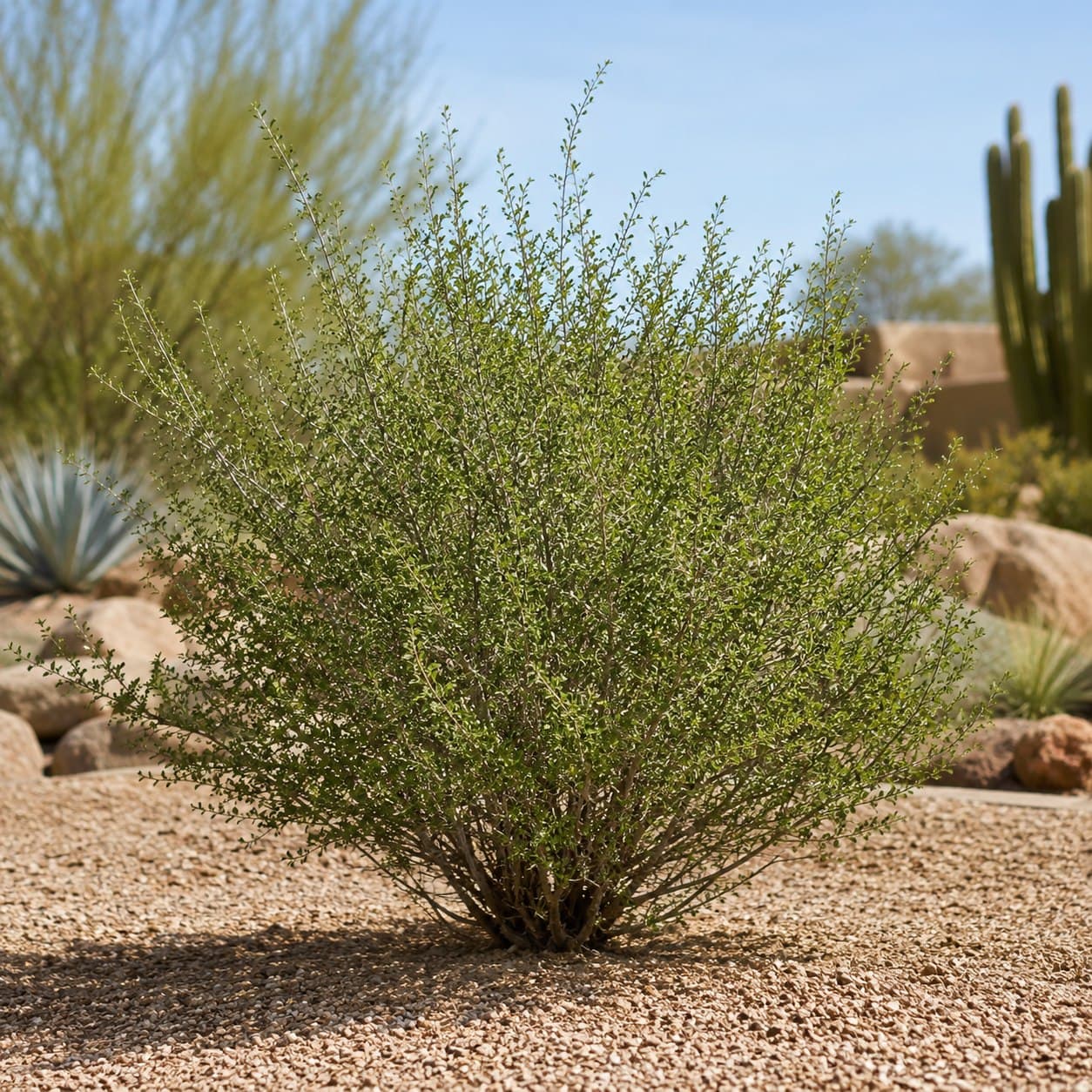
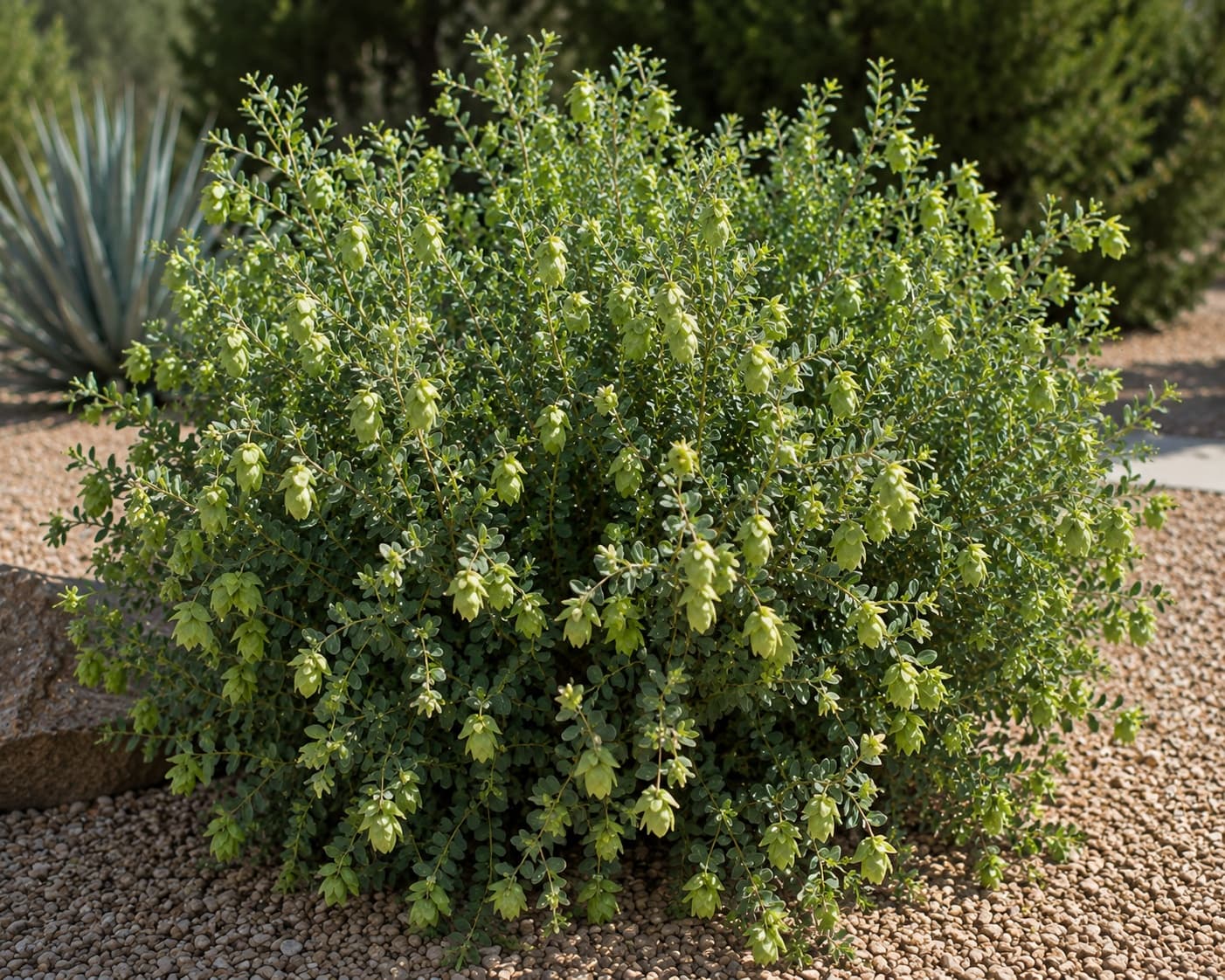
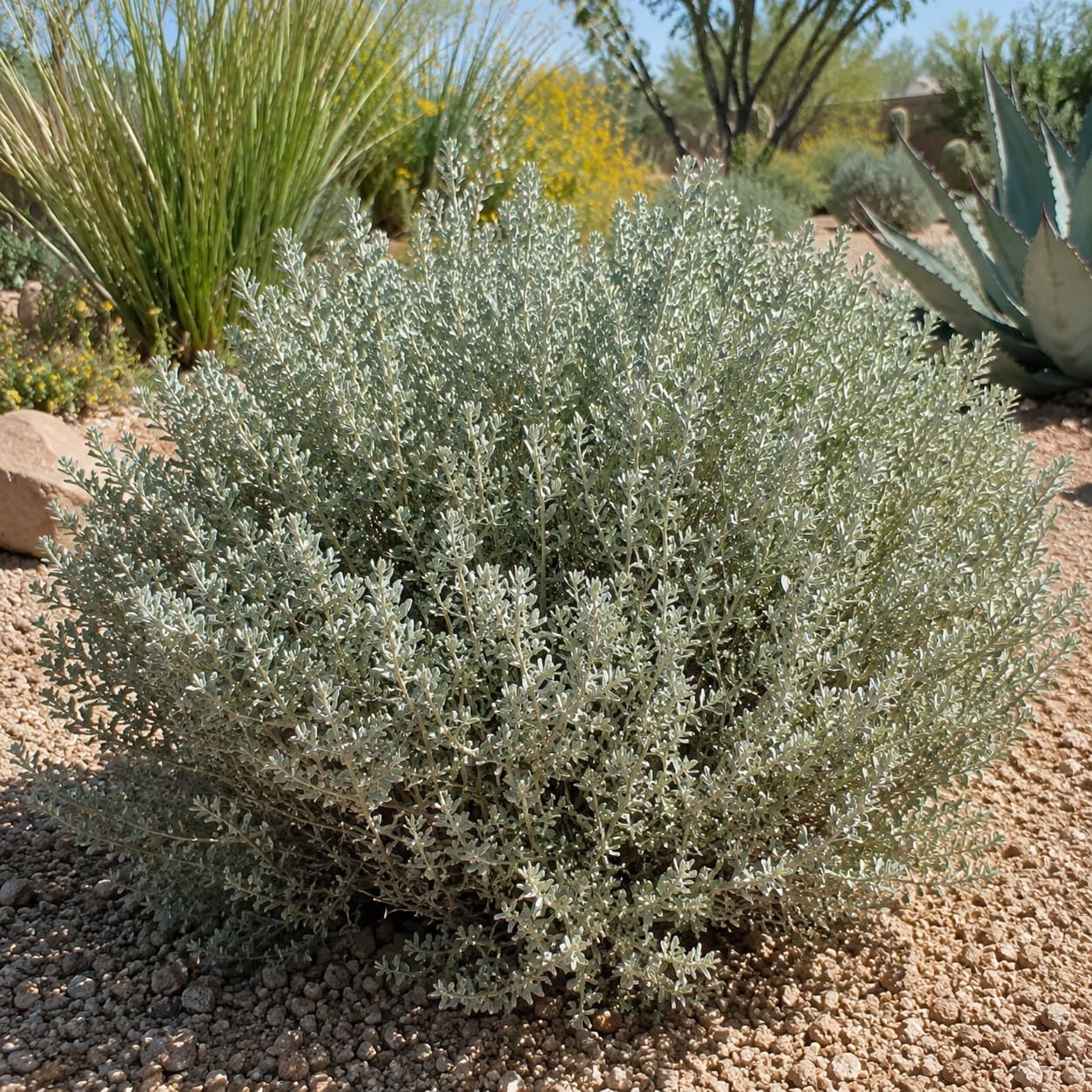
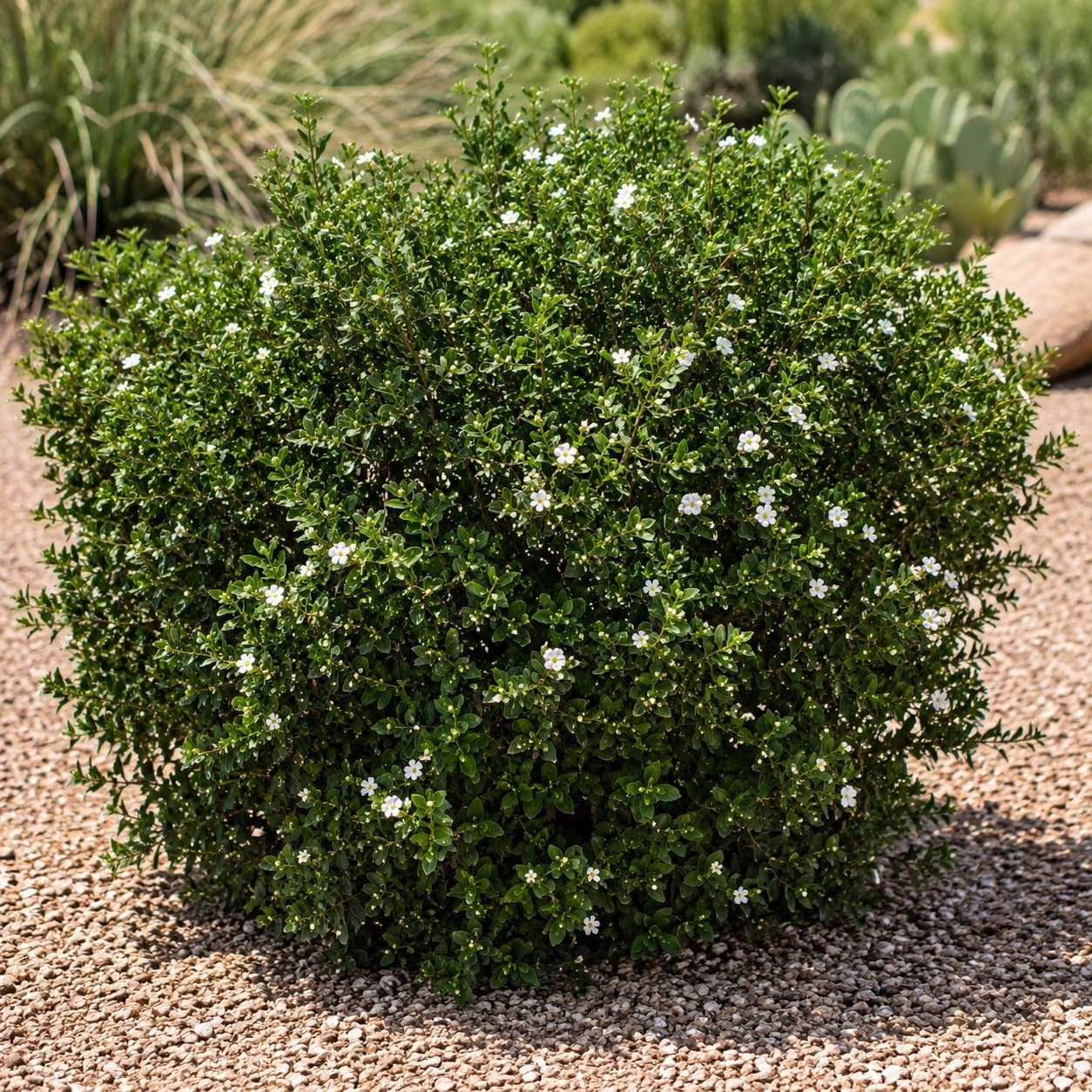
A large, very drought-tolerant shrub from Baja California and Sonora with white-lavender blooms that attract butterflies, hummingbirds, and birds.
Hardy in USDA zones 9-11; a coastal-desert native tolerant of low-desert heat, salinity, and light frost, evergreen in mild winters.
AMWUA Notes
A very-low-water, salt-tolerant coastal-desert shrub; its sharp branch tips warrant placement away from walkways, and it needs little irrigation once established.
Care Guide
Very drought and salt tolerant; water every 2-3 weeks in summer to keep the glossy evergreen foliage dense, then reduce in winter, relying largely on rain.
Prune to shape as a large shrub or screen in late winter; the branch tips are sharp, so wear gloves, and light shaping is all it needs.
No fertilizer needed; it tolerates poor, saline soils.
Free of significant pests.
Evergreen with leathery leaves; inconspicuous white-lavender flowers appear in late winter to spring and again in fall, feeding pollinators and yielding bird-favored fruit.
Soil, Feeding & Propagation
Tolerates saline, alkaline, and caliche soils; wants good drainage at pH 7.5-8.5.
Needs well-drained soil.
None — thrives in lean desert soil without fertilizer.
From seed or semi-hardwood cuttings.
6-7 ft
Non-aggressive roots; safe near hardscape, though sharp tips keep it off walkways.
Placement Tips
- •A dense 8 ft shrub; space 6-7 ft apart as an evergreen screen or large informal hedge.
- •Its salt tolerance suits it to reflected, tough, or coastal-style situations.
- •The sharp branch tips and screening scale keep it away from pool decks and barefoot zones.
- •Full sun; use as background structure and wildlife cover in a native design.
Features
Best Uses
Ecological Value
Attracts
Wildlife Value
Companion Plants
Quick Stats
Design Styles
Include in Your Project
Love Mangle Dulce? Our landscape team sources from wholesale nurseries and can incorporate it into your design.
Talk to a Dream BuilderGet a Project EstimateAlready a Client?
Use this care guide to maintain your Mangle Dulce. Questions about your landscape? Reach out anytime.
Data from 2024 AMWUA “Landscape Plants for the Arizona Desert” guide.
Mangle Dulce — common questions
Answers for low-desert Phoenix conditions, drawn from this plant’s growing data.
How much water does Mangle Dulce need in Phoenix?
Mangle Dulce is a very low-water shrub once established. Very drought and salt tolerant; water every 2-3 weeks in summer to keep the glossy evergreen foliage dense, then reduce in winter, relying largely on rain. A very-low-water, salt-tolerant coastal-desert shrub; its sharp branch tips warrant placement away from walkways, and it needs little irrigation once established.
How big does Mangle Dulce get?
Expect roughly 8 ft tall and 8 ft wide at maturity, with a moderate growth rate. Allow about 6-7 ft of spacing when planting. Non-aggressive roots; safe near hardscape, though sharp tips keep it off walkways.
Can you plant Mangle Dulce near a pool?
Not ideally. Mangle Dulce is not rated pool-friendly, so it is better placed away from the pool deck and skimmer. Litter is rated low.
Can Mangle Dulce handle Arizona heat and winter frost?
Mangle Dulce is hardy in USDA 9-11 and wants full sun. Hardy in USDA zones 9-11; a coastal-desert native tolerant of low-desert heat, salinity, and light frost, evergreen in mild winters. Evergreen with leathery leaves; inconspicuous white-lavender flowers appear in late winter to spring and again in fall, feeding pollinators and yielding bird-favored fruit.
Does Mangle Dulce have thorns?
Yes — Mangle Dulce has small thorns. Site it back from walkways, seating and pool decks where people brush past.
Is Mangle Dulce safe around pets?
Mangle Dulce is listed as pet-friendly in this guide. If your dog is a determined chewer, check any new plant with your vet before planting.
When does Mangle Dulce bloom in Arizona?
Mangle Dulce blooms in late winter-spring, fall, with white-lavender flowers. The bloom draws butterflies, hummingbirds.
How much maintenance does Mangle Dulce need?
Mangle Dulce is low-maintenance. Leaf, flower and pod litter is rated low. Prune to shape as a large shrub or screen in late winter; the branch tips are sharp, so wear gloves, and light shaping is all it needs.
What kind of soil does Mangle Dulce need?
Tolerates saline, alkaline, and caliche soils; wants good drainage at pH 7.5-8.5. It needs no supplemental feeding. No fertilizer needed; it tolerates poor, saline soils.
Is Mangle Dulce native to Arizona?
No. Mangle Dulce is not an Arizona native; it originates from the Baja California, Sonora, but it is grown successfully in low-desert landscapes here.