
Hop Bush
Dodonaea viscosa
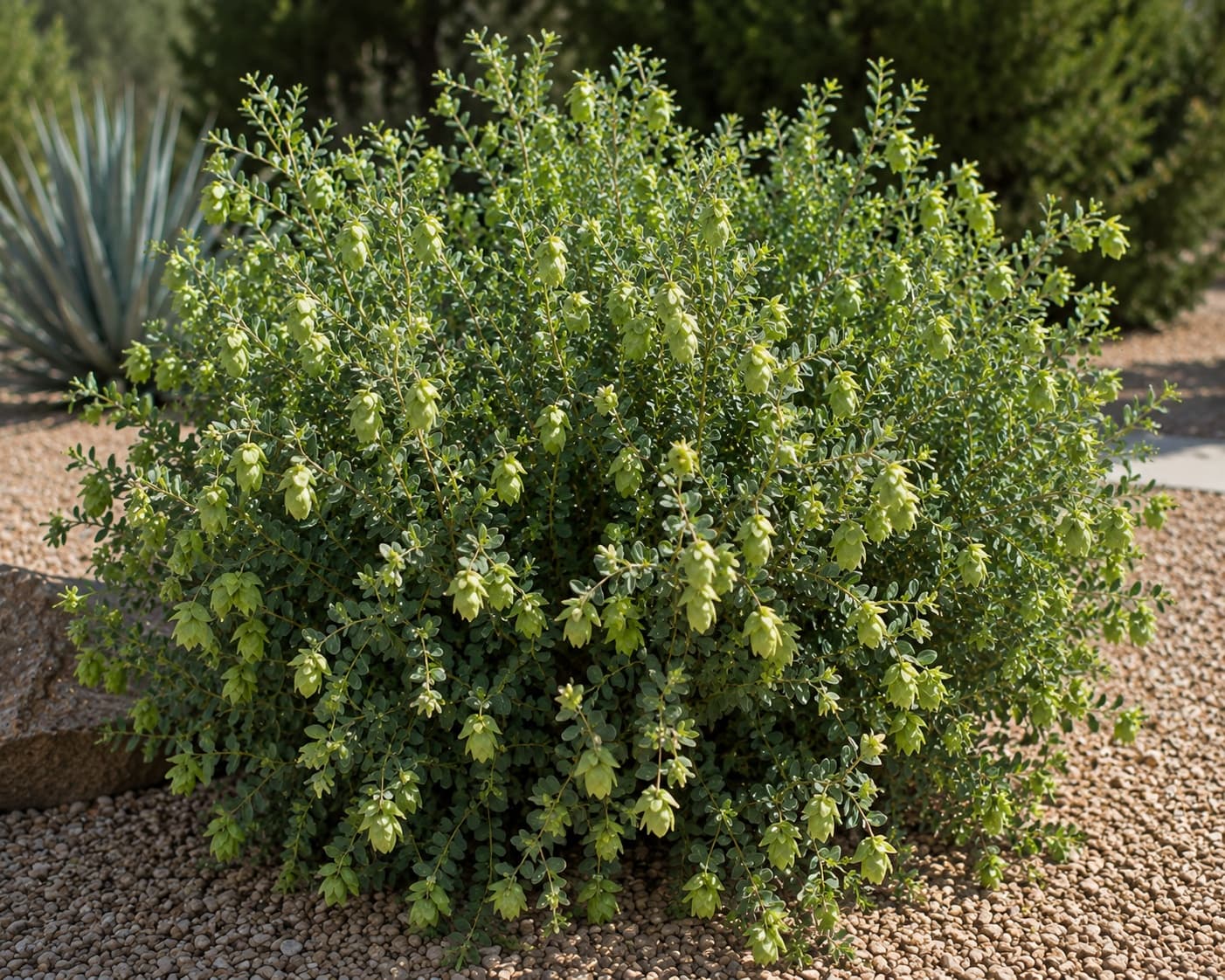
A large evergreen shrub often used as a safe oleander alternative, providing excellent screening and bird habitat.
Hardy in USDA zones 9-11; evergreen through low-desert winters, it can burn below the low 20s in mid-desert cold but thrives in reflected summer heat.
AMWUA Notes
A fast, high-water-establishing screen that becomes drought tolerant when mature; the standard non-toxic alternative to oleander.
Care Guide
Water deeply every 7-10 days in summer to grow a fast, dense screen; once established it becomes notably drought tolerant and can be weaned to less.
Prune to shape or as an informal hedge in late winter or after spring bloom; it tolerates shearing but a lighter hand keeps a more natural, graceful screen.
Light spring feeding speeds establishment; mature plants need little.
Reliably pest-free, one reason it is a preferred non-toxic oleander substitute.
Evergreen year-round; inconspicuous spring flowers on female plants yield showy pink papery seed capsules, and it holds foliage through low-desert winters.
Soil, Feeding & Propagation
Very adaptable to rocky, sandy, or clay soils; tolerates caliche and alkaline pH 7.5-8.5.
Needs well-drained soil.
Low feeder.
From seed (hot-water soak) or semi-hardwood cuttings; purple-leaf forms grown from cuttings; dioecious.
5-6 ft
Deep, non-aggressive roots; safe near walls and pools.
Placement Tips
- •A tall grower to 10 ft; space 5-6 ft apart for a solid privacy hedge or 8 ft as informal specimens.
- •The go-to safe replacement for toxic oleander along walls, pools, and property lines.
- •Clean, low-litter, and non-toxic, it is genuinely pool-friendly for screening around water features.
- •Full sun yields the densest screen; purple-leaf forms add color contrast.
Features
Best Uses
Ecological Value
Wildlife Value
Companion Plants


Quick Stats
Design Styles
Include in Your Project
Love Hop Bush? Our landscape team sources from wholesale nurseries and can incorporate it into your design.
Talk to a Dream BuilderGet a Project EstimateAlready a Client?
Use this care guide to maintain your Hop Bush. Questions about your landscape? Reach out anytime.
Data from 2024 AMWUA “Landscape Plants for the Arizona Desert” guide.
Hop Bush — common questions
Answers for low-desert Phoenix conditions, drawn from this plant’s growing data.
How much water does Hop Bush need in Phoenix?
Hop Bush is a low-water shrub once established. Water deeply every 7-10 days in summer to grow a fast, dense screen; once established it becomes notably drought tolerant and can be weaned to less. A fast, high-water-establishing screen that becomes drought tolerant when mature; the standard non-toxic alternative to oleander.
How big does Hop Bush get?
Expect roughly 10 ft tall and 8 ft wide at maturity, with a moderate growth rate. Allow about 5-6 ft of spacing when planting. Deep, non-aggressive roots; safe near walls and pools.
Can you plant Hop Bush near a pool?
Yes. Hop Bush is considered pool-friendly, meaning it stays clean enough around water features and hardscape. Litter is rated low.
Can Hop Bush handle Arizona heat and winter frost?
Hop Bush is hardy in USDA 9-11 and wants full sun. Hardy in USDA zones 9-11; evergreen through low-desert winters, it can burn below the low 20s in mid-desert cold but thrives in reflected summer heat. Evergreen year-round; inconspicuous spring flowers on female plants yield showy pink papery seed capsules, and it holds foliage through low-desert winters.
Does Hop Bush have thorns?
No. Hop Bush is thornless, so it is safe alongside walkways, patios and play areas.
Is Hop Bush safe around pets?
Hop Bush is listed as pet-friendly in this guide. If your dog is a determined chewer, check any new plant with your vet before planting.
When does Hop Bush bloom in Arizona?
Hop Bush blooms in spring, with yellow-green flowers.
How much maintenance does Hop Bush need?
Hop Bush is low-maintenance. Leaf, flower and pod litter is rated low. Prune to shape or as an informal hedge in late winter or after spring bloom; it tolerates shearing but a lighter hand keeps a more natural, graceful screen.
What kind of soil does Hop Bush need?
Very adaptable to rocky, sandy, or clay soils; tolerates caliche and alkaline pH 7.5-8.5. Nutrient needs are low. Light spring feeding speeds establishment; mature plants need little.
Is Hop Bush native to Arizona?
Yes. Hop Bush is native to Arizona and to the Southern Arizona, worldwide, so it is adapted to local rainfall, soil and heat.