
Natal Plum
Carissa macrocarpa
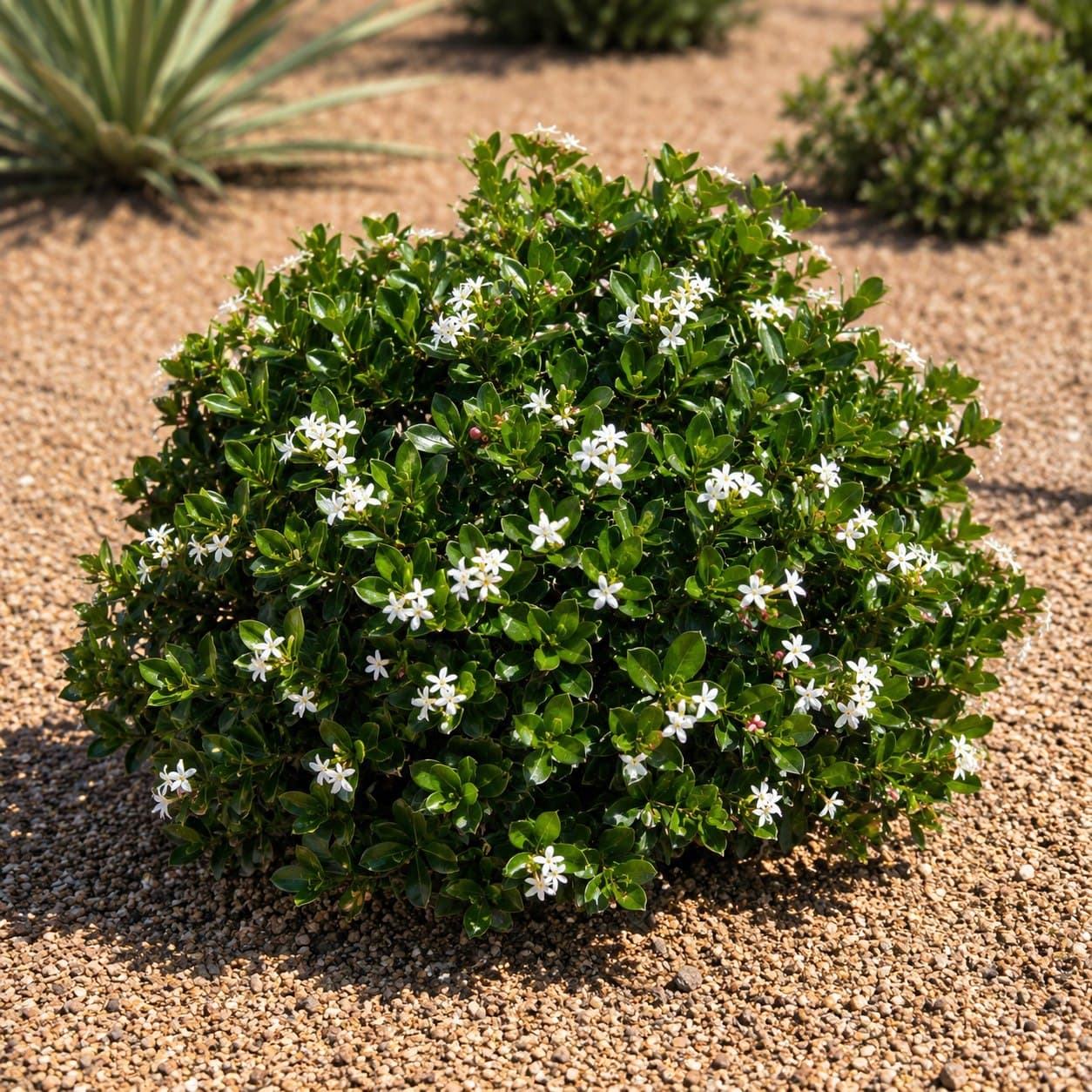
A South African shrub with fragrant white flowers, edible fruit, and medium thorns that creates a lush oasis feel in the desert landscape.
Hardy in USDA zones 9-11 but frost-sensitive; foliage burns below the mid-20s, so favor warmer low-desert microclimates and avoid cold pockets.
AMWUA Notes
A moderate-water South African shrub; the milky sap can irritate skin and it shows heat stress above 110F, so give it afternoon relief in the hottest, most reflected spots.
Care Guide
Water deeply every 7-10 days in summer to keep the glossy foliage lush; it is moderately drought tolerant but looks best with steady moisture and good drainage.
Shears well into a formal hedge and takes shaping any time of year, but wear gloves for the forked thorns; light hand-pruning preserves flowers and fruit.
Feed lightly in spring with a balanced fertilizer; yellowing in alkaline soil may call for chelated iron.
Watch for scale and occasional spider mites; otherwise low-trouble. Note the milky sap can irritate skin.
Evergreen year-round with fragrant white flowers in spring and sporadically after, followed by edible red plum-like fruit; sensitive to hard frost below the mid-20s.
Soil, Feeding & Propagation
Prefers well-drained sandy or loamy soil; tolerates alkaline pH but can grow chlorotic in heavy caliche.
Needs well-drained soil.
Moderate feeder.
From seed or semi-hardwood cuttings.
4-5 ft
Shallow, non-invasive roots; safe near structures and paving.
Placement Tips
- •At up to 7 ft it forms a dense hedge; space 4-5 ft apart for a screen or use dwarf forms for lower borders.
- •The forked thorns make an outstanding security or barrier hedge along fences and under windows.
- •Keep well back from pool decks and barefoot areas because of the thorns despite its low litter.
- •Site in full sun for best flowering and fruit set, with protection from the hardest frost.
Features
Best Uses
Companion Plants


Quick Stats
Design Styles
Include in Your Project
Love Natal Plum? Our landscape team sources from wholesale nurseries and can incorporate it into your design.
Talk to a Dream BuilderGet a Project EstimateAlready a Client?
Use this care guide to maintain your Natal Plum. Questions about your landscape? Reach out anytime.
Data from 2024 AMWUA “Landscape Plants for the Arizona Desert” guide.
Natal Plum — common questions
Answers for low-desert Phoenix conditions, drawn from this plant’s growing data.
How much water does Natal Plum need in Phoenix?
Natal Plum is a moderate-water shrub once established. Water deeply every 7-10 days in summer to keep the glossy foliage lush; it is moderately drought tolerant but looks best with steady moisture and good drainage. A moderate-water South African shrub; the milky sap can irritate skin and it shows heat stress above 110F, so give it afternoon relief in the hottest, most reflected spots.
How big does Natal Plum get?
Expect roughly 7 ft tall and 7 ft wide at maturity, with a moderate growth rate. Allow about 4-5 ft of spacing when planting. Shallow, non-invasive roots; safe near structures and paving.
Can you plant Natal Plum near a pool?
Not ideally. Natal Plum is not rated pool-friendly, so it is better placed away from the pool deck and skimmer. Litter is rated low.
Can Natal Plum handle Arizona heat and winter frost?
Natal Plum is hardy in USDA 9-11 and wants partial shade. Hardy in USDA zones 9-11 but frost-sensitive; foliage burns below the mid-20s, so favor warmer low-desert microclimates and avoid cold pockets. Evergreen year-round with fragrant white flowers in spring and sporadically after, followed by edible red plum-like fruit; sensitive to hard frost below the mid-20s.
Does Natal Plum have thorns?
Yes — Natal Plum has medium thorns. Site it back from walkways, seating and pool decks where people brush past.
Is Natal Plum safe around pets?
Natal Plum is listed as pet-friendly in this guide. If your dog is a determined chewer, check any new plant with your vet before planting.
When does Natal Plum bloom in Arizona?
Natal Plum blooms in spring, with white flowers. The flowers are fragrant.
How much maintenance does Natal Plum need?
Natal Plum is low-maintenance. Leaf, flower and pod litter is rated low. Shears well into a formal hedge and takes shaping any time of year, but wear gloves for the forked thorns; light hand-pruning preserves flowers and fruit.
What kind of soil does Natal Plum need?
Prefers well-drained sandy or loamy soil; tolerates alkaline pH but can grow chlorotic in heavy caliche. Nutrient needs are moderate. Feed lightly in spring with a balanced fertilizer; yellowing in alkaline soil may call for chelated iron.
Is Natal Plum native to Arizona?
No. Natal Plum is not an Arizona native; it originates from the South Africa, but it is grown successfully in low-desert landscapes here.