
Pomegranate
Punica granatum

An ornamental and productive shrub prized for its edible fruit, white summer blooms, and value to birds.
Hardy in USDA zones 7-11; deciduous and very cold-tolerant, it handles both mid-desert winters and the long, hot low-desert summers fruit needs.
AMWUA Notes
A moderate-water fruiting shrub that survives on little but needs consistent irrigation for quality fruit; drought stress causes splitting.
Care Guide
For good fruit, water deeply and consistently every 7-10 days from bloom through harvest; erratic watering causes the fruit to split, though the plant survives on much less.
Prune in winter dormancy to a few main trunks, removing suckers and crossing wood; fruit forms on new growth from mature stems, so avoid heavy indiscriminate shearing.
Feed lightly in early spring; too much nitrogen favors leaves over fruit.
Watch for aphids and leaf-footed plant bugs on developing fruit; remove basal suckers routinely.
Deciduous with yellow fall color; orange-red flowers in summer set the leathery fruit that ripens in fall, and it drops its leaves in winter.
Soil, Feeding & Propagation
Tolerates a wide range including clay and alkaline caliche, but fruits best in deep, well-drained loam.
Needs moderate soil.
Moderate feeder.
Hardwood cuttings root easily; also from seed and suckers.
8 ft
Suckering root system; keep 5+ ft from paving and foundations.
Placement Tips
- •An 8 ft multi-trunk shrub; space 8 ft apart or use as an edible specimen and prune suckers to keep it shrubby or tree-form.
- •Excellent in an edible or Mediterranean landscape and as an informal fruiting hedge.
- •Fruit drop can stain, so keep it back from pool decks and light hardscape despite low leaf litter.
- •Full sun and consistent water during fruiting give the best harvest.
Features
Best Uses
Ecological Value
Wildlife Value
Companion Plants


Quick Stats
Design Styles
Include in Your Project
Love Pomegranate? Our landscape team sources from wholesale nurseries and can incorporate it into your design.
Talk to a Dream BuilderGet a Project EstimateAlready a Client?
Use this care guide to maintain your Pomegranate. Questions about your landscape? Reach out anytime.
Data from 2024 AMWUA “Landscape Plants for the Arizona Desert” guide.
Pomegranate — common questions
Answers for low-desert Phoenix conditions, drawn from this plant’s growing data.
How much water does Pomegranate need in Phoenix?
Pomegranate is a moderate-water shrub once established. For good fruit, water deeply and consistently every 7-10 days from bloom through harvest; erratic watering causes the fruit to split, though the plant survives on much less. A moderate-water fruiting shrub that survives on little but needs consistent irrigation for quality fruit; drought stress causes splitting.
How big does Pomegranate get?
Expect roughly 8 ft tall and 8 ft wide at maturity, with a moderate growth rate. Allow about 8 ft of spacing when planting. Suckering root system; keep 5+ ft from paving and foundations.
Can you plant Pomegranate near a pool?
Yes. Pomegranate is considered pool-friendly, meaning it stays clean enough around water features and hardscape. Litter is rated low.
Can Pomegranate handle Arizona heat and winter frost?
Pomegranate is hardy in USDA 9-11 and wants full sun. Hardy in USDA zones 7-11; deciduous and very cold-tolerant, it handles both mid-desert winters and the long, hot low-desert summers fruit needs. Deciduous with yellow fall color; orange-red flowers in summer set the leathery fruit that ripens in fall, and it drops its leaves in winter.
Does Pomegranate have thorns?
No. Pomegranate is thornless, so it is safe alongside walkways, patios and play areas.
Is Pomegranate safe around pets?
Pomegranate is listed as pet-friendly in this guide. If your dog is a determined chewer, check any new plant with your vet before planting.
When does Pomegranate bloom in Arizona?
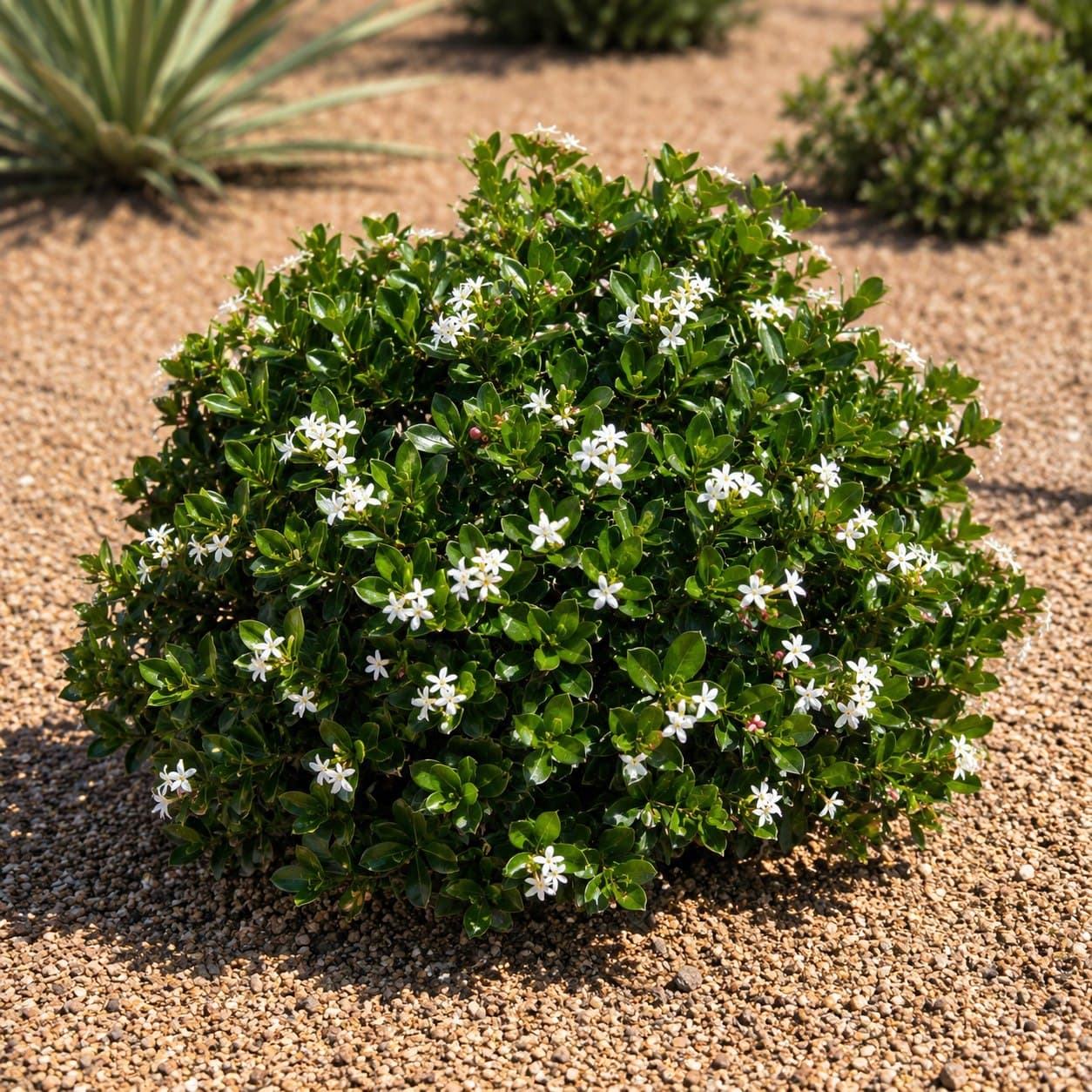
Pomegranate blooms in summer-fall, with white flowers.
How much maintenance does Pomegranate need?
Pomegranate is low-maintenance. Leaf, flower and pod litter is rated low. Prune in winter dormancy to a few main trunks, removing suckers and crossing wood; fruit forms on new growth from mature stems, so avoid heavy indiscriminate shearing.
What kind of soil does Pomegranate need?
Tolerates a wide range including clay and alkaline caliche, but fruits best in deep, well-drained loam. Nutrient needs are moderate. Feed lightly in early spring; too much nitrogen favors leaves over fruit.
Is Pomegranate native to Arizona?
No. Pomegranate is not an Arizona native; it originates from the Southern Asia, Mediterranean, but it is grown successfully in low-desert landscapes here.